The Cost of Poor Training: Why Companies Can’t Afford to Ignore Microlearning
You hire. You train. They burn out. They leave. Sound familiar? Employee retention has become a continual struggle in recent years for companies of all sizes.
 Article content provided by Tyfoom.
Workers are not as loyal to their employers as in decades past, with "job hopping" for better pay or new opportunities becoming increasingly common. In fact, nearly half of employees say they’re planning to look for a new job in the next three months. And 75% of employees would seriously contemplate quitting if another opportunity arose, even if they were not actively seeking a new job.
Between burnout, rampant inflation, and stagnating wages, the labor market has become extremely competitive. A reported 68% of employers are having difficulty attracting the right talent to open positions. The average time to fill a role is now 42 days - a 161% increase from 26 days in 2010.
And if a position is filled, how do you keep the new hire? An estimated 1 in 3 hires will leave a company within two years.
No company wants a revolving door of employees, and for good reason. Turnover is expensive. Replacing an entry-level employee costs an estimated $15,000, while a senior-level executive can be as high as $120,000. A good rule of thumb is that turnover costs employers 33% of an employee's annual salary.
With so much money on the line, you want to hire the best. But there's a lot of competition. With potential new hires (and even your seasoned employees) being open to new possibilities, companies must focus on making their workplace one that people want to be a part of. It's not about forcing team members to stay; it's about building an environment where top performers feel excited to stick around and grow.
But how do you do that?
Training.
Training Matters (More Than You Think)
Without a commitment to continuous learning and development, employees become stagnant in their skills, knowledge and productivity, hindering the organization's innovation and adaptability. This lack of growth for employees can lead to decreased motivation, disengagement, and, ultimately, turnover. Employers not only lose key players and the valuable institutional knowledge and expertise that leaves with them, but are also left to foot the bill of recruiting and training replacements.
But all training is not created equal. The financial and operational impact of ineffective training is staggering. According to estimates, U.S. businesses lose between $450 billion and $550 billion annually due to undertrained, and consequently, disengaged employees. Poor training doesn’t just drain company resources - it hurts employee performance, erodes morale and jeopardizes an organization's viability.
The Obvious Costs of Poor Training
1. Recruiting and Hiring
Recruiting expenses can run as high as 20% to 30% of the new hire's first-year salary. The costs of application screening, time spent interviewing candidates, and post-interview tasks like checking references and administering pre-employment tests also quickly add up. Not to mention the hard costs of signing bonuses, relocation expenses or new employee equipment. And that's not even counting onboarding and training!
2. Damaged Customer Relations
Employees are often the face of a company, and their interactions with customers can make or break a brand’s reputation. Poorly trained staff are more likely to provide inconsistent service, mishandle complaints or fail to meet customer needs. A single negative experience can cost a company a loyal customer, and research shows that it takes 12 positive interactions to make up for one bad one. Poor training creates a ripple effect, driving dissatisfied customers to competitors, which in turn damages the company's market position.
3. Errors, Injuries and Liability
Inadequate training doesn’t just hurt productivity; it puts employees and organizations at risk. Workers who aren’t properly trained on safety protocols or equipment usage are more likely to make mistakes, leading to accidents, injuries, and even fatalities.
According to the National Safety Council (NSC), the average cost of injuries for workers is $42,000. For fatal work accidents, the average work injury cost per worker jumps to more than $1.3 million. Businesses in the U.S. lose nearly $2 billion each year from worker injuries. The majority of workplace incidents are preventable because most are caused by human error. With proper training, employers can promote a culture of safety and significantly reduce the direct and indirect costs of injury. And, most importantly, save human lives.
Compliance risks are another significant concern. Improperly trained employees may inadvertently violate regulations, resulting in fines, lawsuits and reputational damage. For heavily regulated industries, these mistakes can be catastrophic. Establishing best practices begins with the new hire. If new employees are not properly trained, the company becomes exposed to legal risks and financial ruin.
The Not-So-Obvious Costs of Poor Training
1. Decreased Productivity
Poor training leads to disengaged employees, and disengagement is expensive. Apathetic workers are more likely to be less efficient, miss deadlines and require frequent supervision to complete tasks. As a result, a single disengaged employee can cost a company $3,400 in lost productivity for every $10,000 in salary each year.
Disengaged workers are also more likely to leave, requiring a replacement. New employees do not produce at a high level while in training and are more prone to errors. Between the time to hire (it takes 41 days on average to hire someone for a position), the opportunities lost due to the inability to handle demand until the position is refilled and new hire error, companies lose an estimated 25% of the income and profits generated by the previous employee until the new employee moves to full capacity which can be six months or more.
If new hires also receive poor training, they are also more likely to resign starting the whole process over again.
2. Burnout
Employers aren't the only ones hurt by turnover. The employees who stay are often left scrambling to cover the additional workload. The stress and fatigue of understaffing results in diminished production quality; safety issues from under-trained or harried employees; and poor workplace morale. If a replacement is not hired or trained fast enough, employees who feel overburdened and burned out also leave.
Nearly 6 in 10 frontline workers say that they have experienced additional stress due to low staffing levels over the last year. If left unchecked, chronic stress and dissatisfaction can lead to diminished mental health and higher rates of absenteeism. Currently, 1 in 5 workers (19%) in the U.S. rate their mental health as "fair" or "poor." Workers with fair or poor mental health, on average, have 12 days of unplanned absences each year compared with 2.5 days for workers who rate their mental health as "good," "very good" or "excellent."
Employees with unplanned absences place even more burden on the remaining team members who in turn may begin to feel overburdened, stressed and dissatisfied, creating a perilous domino effect for the company.
3. Lost Institutional Knowledge
Institutional knowledge is like the collective memory of a company - that is, it comprises all the information possessed by an organization and its employees. According to recent studies, institutional knowledge matters quite a bit. It is estimated that 42% of company skills are known only by one person. Unsurprisingly, new hires waste around 200 hours duplicating their predecessors' work.
A poll found that 81% of employees are frustrated when they can’t access unique knowledge, and 63% of employees prefer to work for organizations where knowledge is preserved.
Companies with poor training lose valuable institutional knowledge. When experienced employees leave, they take with them years of insights, workflows and expertise that new hires struggle to replicate. This knowledge gap can lead to inefficiencies and costly errors.
Engagement is Essential
Engaged employees come to work with passion, purpose and energy, increasing their resilience to workplace stressors. They also become a company's most valuable advocates, spreading positivity and attracting top talent. As a result, organizations with highly engaged employees enjoy a 41% reduction in absenteeism and 59% less turnover, saving thousands of dollars each year in hiring, training and onboarding costs.
However, only 1 out of every 3 employees is engaged at work. Of these, 50% are so disengaged they are considered "quiet quitters" - those who only do the bare minimum. Conversely, workers who feel they have the training necessary to perform on the job are three times more likely to stay with their employer.
Companies that do not promote a learning culture run the risk of being outperformed by their competition who did invest in learning. According to a study by Deloitte, organizations that invest in a learning culture experience 37% higher productivity and are 92% more likely to innovate. Unsurprisingly, these companies are also 46% more likely to be first to market.
A culture of learning is increasingly essential to employees as well. A reported 56% of workers rate career growth as more important than pay, but at the same time, 47% are dissatisfied with their current training programs.
Microlearning Beats the Pitfalls of Poor Training
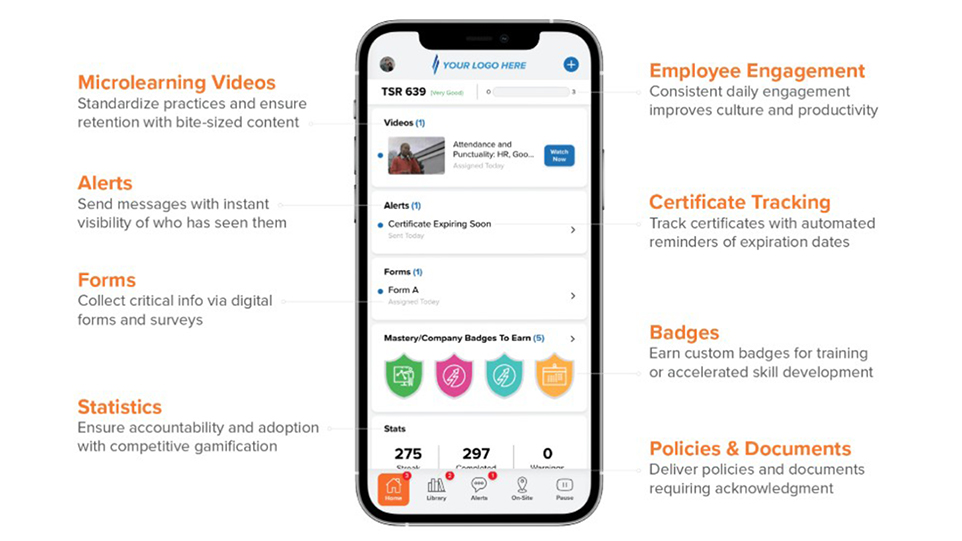
- Unsurprisingly, employees who have fun at work are more likely to experience high job satisfaction, which in turn boosts creativity, productivity and a willingness to collaborate. Microlearning helps organizations increase employee job satisfaction by:
- Creating incentivized goals: Engagement scores can be used to incentivize participation and behavior changes when tied to year-end bonus amounts, etc. Learners can track their progress, view achievements and compare their standing on leaderboards in real time. Managers can also highlight employee achievements with company-wide shout-outs through the "messaging" feature.
- Regularly acknowledging accomplishments: Keeping employees in the loop: Managers can deliver clear, consistent messages to all employees instantaneously through the app.
- Fostering a creative workplace: Microlearning apps empower employees to be proactive and creative. Within the app, employees can easily record and submit their own training. Once approved, these videos can be instantly shared company-wide.
How to Take Training from Poor to Powerful
Training doesn’t have to be long, boring or something employees dread. In fact, with the right approach, you can turn training into something your team genuinely looks forward to and even becomes addicted to (this is a good thing for you). The secret lies in making it accessible, relevant and bite-sized.
Microlearning addresses the shortcomings of traditional training methods by delivering content in short, focused bursts. This approach is designed to engage employees, enhance retention, and drive measurable outcomes. Here’s how:
1. Reduce Turnover with Personalized Learning
Microlearning platforms can tailor training content to meet individual employee needs. By focusing on relevant, role-specific skills, employees feel supported and empowered in their jobs. This personalization fosters a sense of value and belonging, reducing the likelihood of turnover. Studies show that organizations with strong learning cultures experience 30% to 50% higher employee retention rates.
2. Use On-Demand Training to Boost Productivity
Microlearning provides employees with the tools they need when they need them. Accessible through mobile devices, short training sessions can be completed in the flow of work without disrupting productivity. This “just-in-time” learning approach ensures employees can immediately apply new skills, increasing efficiency and output.
Unlike traditional training, which often involves hours-long lectures, microlearning breaks content into digestible segments. Employees retain more information - 80% more - and can quickly revisit modules as needed to refresh key concepts.
3. Focus on Safety and Compliance
Microlearning’s bite-sized lessons are perfect for teaching safety protocols and regulatory guidelines. Regular, spaced-out sessions ensure that employees retain critical information and stay up to date on best practices. Quizzes and interactive scenarios reinforce learning while providing real-time feedback, reducing the likelihood of costly safety errors and compliance mistakes.
The ROI of Microlearning
Investing in microlearning isn’t just a smart move - it’s a profitable one. Companies that adopt microlearning see significant returns, including:
- Higher Engagement: Employees trained through microlearning are 72% more engaged than those using traditional methods of training.
- Increased Retention: Knowledge retention rates soar to 95% when microlearning is used, compared to just 10% with text-based training.
- Cost Savings: Microlearning reduces training time by 45%, minimizing downtime and maximizing productivity.
Shorter training sessions mean less time away from work, while higher engagement and retention lead to better performance and bigger profits.
The Bottom Line: Your Bottom Line Needs Microlearning
Poor training is an expensive liability, but it’s one that companies can avoid. Microlearning offers a proven, cost-effective solution to the challenges of employee development, delivering results that traditional methods simply can’t match. By investing in bite-sized, engaging training modules, organizations can:
- Reduce turnover and recruitment costs
- Boost productivity and efficiency
- Minimize safety incidents and compliance risks
- Enhance customer satisfaction and loyalty
- See measurable ROI after implementation
The benefits of microlearning extend beyond individual training sessions. By integrating this approach into daily workflows, organizations can cultivate a culture of continuous learning. This cultural shift not only enhances employee satisfaction but also drives innovation, adaptability, and long-term success.
Employees who engage in daily microlearning are more likely to view skill development as a lifelong journey rather than a box to check. This mindset fosters resilience and a growth-oriented attitude, positioning companies to thrive in competitive markets.
In today’s fast-paced business environment, companies can’t afford to ignore the power of microlearning because it offers such a clear competitive advantage.

Contact a Tyfoom representative.
Tyfoom is the #1 engagement platform for employee communication and training. Tyfoom provides a simple and easy way to connect all employees with leaders every day to improve culture, productivity and employee engagement. Tyfoom employs non-disruptive, science-based techniques and gamification to facilitate the transfer of knowledge and increase accountability. Tyfoom helps organizations more effectively manage training, communication and engagement for remote, mobile and on-the-go employees through video-based microlearning, content distribution, messaging, forms, policies and document delivery, and time tracking.
Jun 23, 2026 — Products & Services Update
Latest Articles
Sep 28, 2026 - Milwaukee Tool introduces the latest advancements in their NEXUS™ Modular Vacuum System, delivering groundbreaking innovations for jobsite cleanup.
Sep 28, 2026 - Mestek Machinery and Stratus have a partnership connecting Stratus' digital fabrication tools with the Lockformer Spiral Tubeformer, streamlining HVAC sheet metal workflows through real time data exchange.
Sep 28, 2026 - Phishing is a common method cybercriminals use to try to infiltrate businesses.
Privacy Policy |
Terms of Use | Contact Us
Phone: 703.803.2980 | Email:
info@smacna.org
© 1998-2026 SMACNA. All rights reserved.
Web Design & Development by Matrix Group
International, Inc.
