
HVAC: Between the Lava and the Rain
Hawaii Sheet Metal & Mechanical works amid the challenges of an active volcano.
The Big Island of Hawaii is home to six active volcanoes, according to the U.S. Geological Survey (USGS), with Kilauea being one of the most active volcanoes in the world. Some vents have continuously flowed for almost 35 years — from 1983 to 2018. In late 2022, neighboring Mauna Loa, the world’s largest shield volcano, also erupted.
SMACNA member Brian Ninomoto, president of Hawaii Sheet Metal & Mechanical in Hilo, Hawaii, had a spectacular view just steps from his back door. “On the first day, I think the lava from the eruption was 200 feet high,” he says. “And, at night, you could see it even more.”
 Ninomoto is no stranger to seismic activity. He lives with earthquakes, which shake the Hawaiian Islands thousands of times each year. Also, he works about 5 miles from the beach, just outside the tsunami evacuation zone. “I can see the evacuation sign from my office,” Ninomoto says. Local building codes require seismic restraints. “Everything's tied down.”
But day in and day out, his biggest challenge is the torrential rain. “I was in California for New Year’s Day,” Ninomoto says. “It rained half an inch while I was there, and it was flooding everywhere. Here we get half an inch in 10 minutes.” Hilo is in a tropical rain forest climate where the average annual rainfall is 130 inches or over 10 feet annually. It rains about 211 days a year on this part of the Big Island. “Roofing projects are tricky. We don't rely on weather news. We go straight to NOAA to look at the satellite images ourselves and try to determine what the weather will be.”
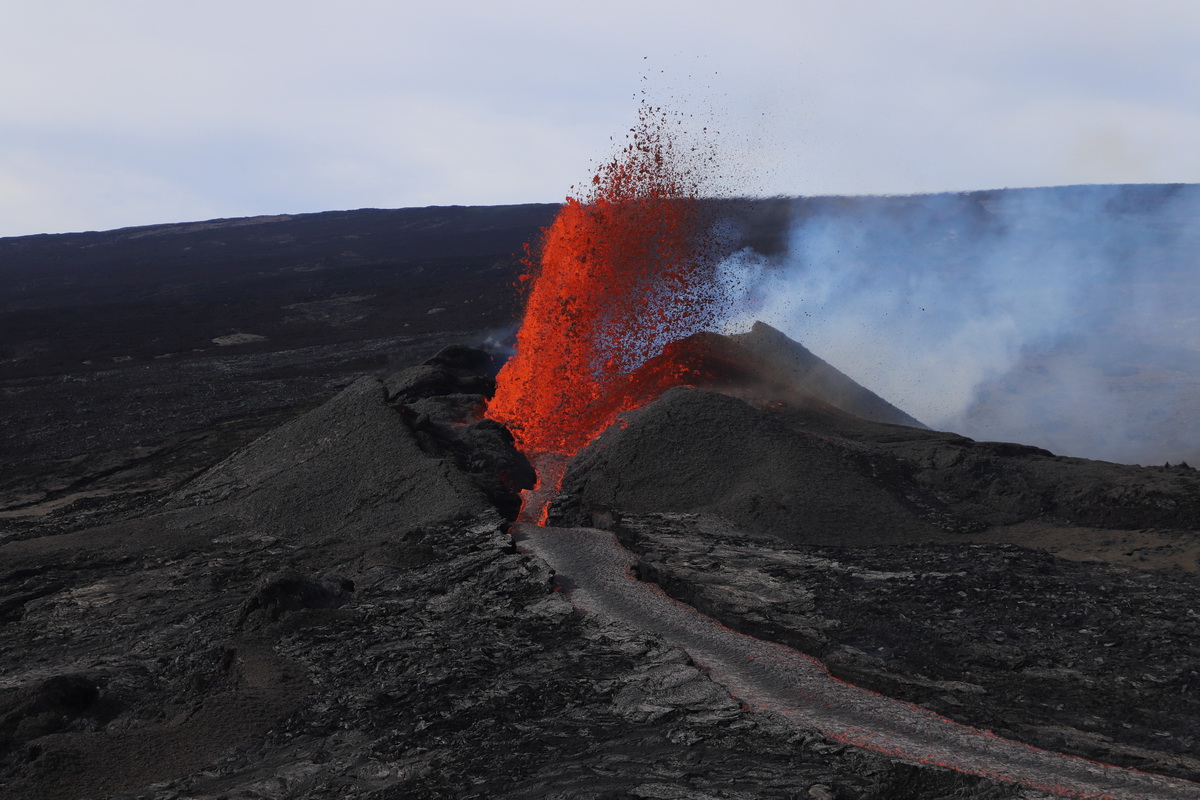
When Mauna Loa erupted, Brian Ninomoto, president of Hawaii Sheet Metal & Mechanical in Hilo, Hawaii, had a front row seat. The company is used to dealing with the volcano's impacts on business operations
and indoor air quality.
Good information is critical to keeping his business profitable in this extreme environment. Besides weather satellites, Ninomoto tracks Civil Defense announcements. During a recent lava flow from Mauna Loa that threatened a highway his business relies on, Ninomoto used this information to stay abreast of travel conditions and ensure that the roads remained passable. “They’ve got helicopters flying over the lava flows watching, and they're really good about keeping everybody informed,” he says. “When the lava was coming down the slope, it looked like rivers running through a waterfall. But when it hit the flat land and spread out, it hardened and slowed down.” Luckily, lava never reached the highway.
Housing on a tropical volcano is unique. Snow falls at high altitudes on the volcano, but people living in warmer climates close to sea level see a different type of “snow” from the ash of the volcano. Heating systems are rare. “We’re diversified to stay busy,” Ninomoto says. “We’re a mechanical contractor, meaning air conditioning and refrigeration. We don’t do plumbing, but we do everything else — HVAC through architectural.”
Because the climate is warm, local builders don’t bother with insulation or tight construction, which can lead to too much humidity and moldy conditions. As a result, islanders can be exposed to “vog,” or smog from a volcano. “Volcanoes emit sulfur dioxide and CO2. It smells like eggs,” Ninomoto explains. “We get a lot of calls to check air filters when there's volcanic activity. People request carbon filters because active carbon helps with odor control inside the house.”
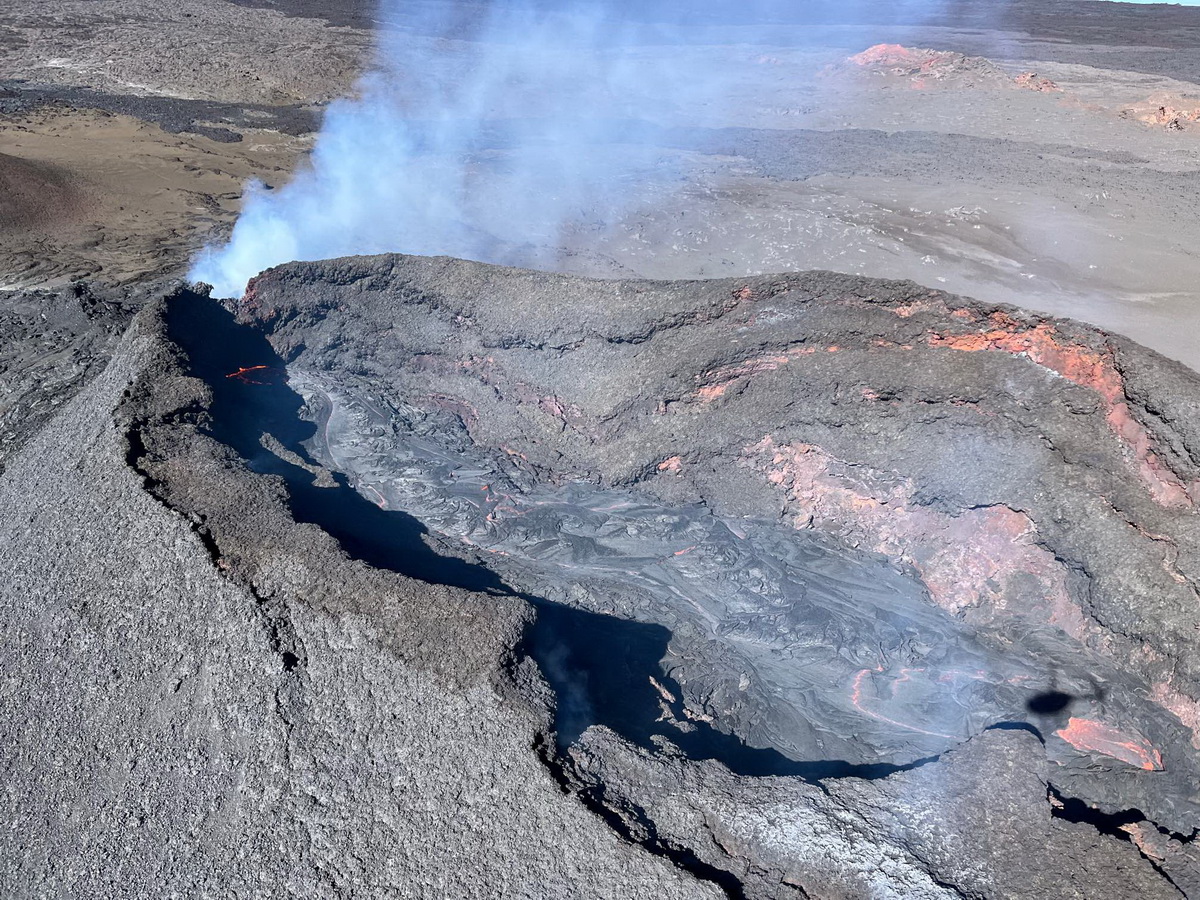 Volcanic fumes and ash can cause health issues for people who are sensitive or have allergies. “If you're extremely close and downwind, you’ve got to be careful because it will burn the throat,” Ninomoto says. Schools in Hilo never have snow days but close when the vog is heavy. “They shut government offices down and tell everybody to stay inside until sea breezes pull the vog away.”
Vog is why Hawaii Sheet Metal & Mechanical taped up the windows of the community center in Pahala, Hawaii, a few years ago. “We got a call from the Parks Department because the town was getting heavy ash, falling like snow.” Officials designated the community center as a shelter for residents with respiratory difficulties, but ashes and gas still came into the building. “I told them we should close the outside air dampers and seal them off just to keep that facility sealed off from outside.” The tape around windows kept vog from seeping in through cracks.
Vog complicates COVID mitigation because bringing outside air into a building can be hazardous. Ninomoto worked with the State Department of Education to equip all public school classrooms in Hawaii with portable air filtration units that remove COVID particles even during eruptions.
“We live on active volcanoes, so we're always ready for whatever comes,” he says. “Natural disasters happen, so stay out of the way. Everybody here takes precautions. It’s part of life.”
Published: March 21, 2023
IN THIS ISSUE
ARCHITECTURAL: Crafting Metal Works of Art
Artists make unique clients for A. Zahner Co., which has extensive experience in this area.
How SMACNA Is Increasing Engagement Opportunities
Measuring and evaluating engagement and utilizing that information to tailor programming to the needs of members is now more important than ever.
HVAC: Between the Lava and the Rain
Hawaii Sheet Metal & Mechanical works amid the challenges of an active volcano.
INDUSTRIAL: HVAC for U.S. Air Force Hangars
United Mechanical tackles its fifth hangar project — the KC-46A Three Bay Maintenance Hangar at Tinker Air Force Base in Midwest City, Oklahoma.
Inside SMACNA's 2023 Strategic Plan
SMACNA’s CEO discusses the new strategic plan and how it will strengthen SMACNA’s position with key stakeholders.
Opportunity Is In The Air
Assuring clean air in buildings is becoming an essential service, and members can easily gain the tools to perform in-demand ventilation verification work.
RESIDENTIAL: Effective High-end Residential Strategies
T.H. Martin shares eight tips for working on condos, apartments and hybrid spaces.
State Marijuana Laws May Pose Security Clearance Problems for Contractors
In recent years, states have moved quickly to pass laws legalizing marijuana. To date, 21 states have legalized recreational marijuana and an additional 16 states have authorized marijuana for medical use.
State of the Union Response & GSA Carbon Scoring Rule Updates
Both chambers were in session in early February for the State of the Union legislative week. On Feb. 7, President Biden gave the State of the Union address to a pre-pandemic-sized crowd in the House chambers.
The Weakest Link?
With an uncertain supply chain that still seems broken, many SMACNA contractors are turning to stockpiles and substitutions to keep projects and profits on track.
Top Contractor Strategies for 2023: Part 1
With 2023 well underway, there is still a lot of noise in the world today that detours business owners from charting a confident course through this new year.
Understanding Possible Targets of Cyberattacks
With reports telling us that cyberattacks have been perpetually on the rise, and with the cybersecurity industry not only short millions of qualified professionals but also suffering from burnout, preparing for attacks is getting tougher.
Welcome New SMACNA Members
Welcome New SMACNA Members
Privacy Policy |
Terms of Use | Contact Us
Phone: 703.803.2980 | Email:
info@smacna.org
© 1998-2026 SMACNA. All rights reserved.
Web Design & Development by Matrix Group
International, Inc.
