HVAC: Flying High Again
SMACNA member W.G. Tomko’s work on the redesigned mechanical systems at Pittsburgh International Airport was key to the $1.7-billion renovation project.
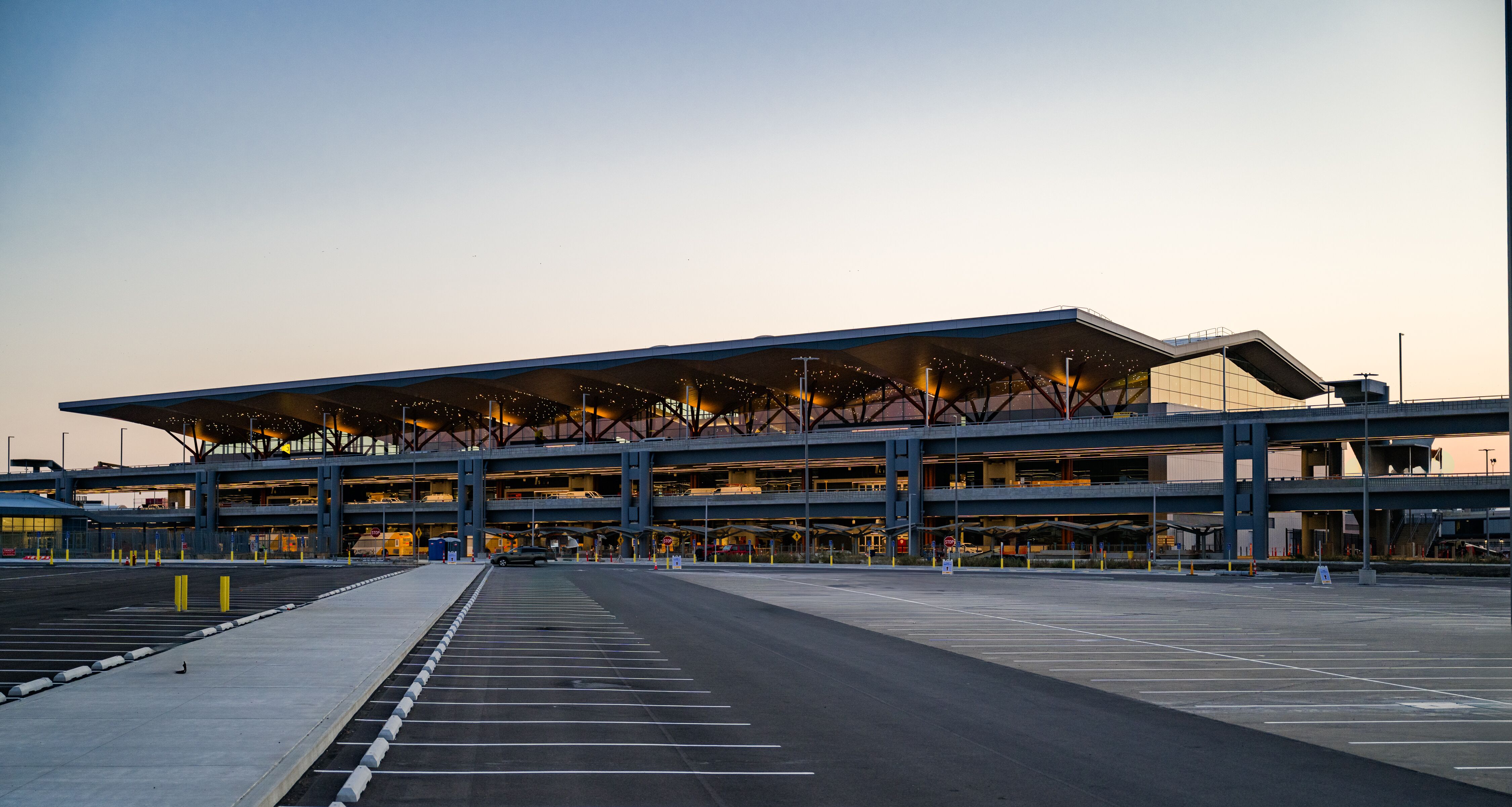
Pittsburgh International Airport was once called “the airport of the future” by The New York Times.
Extensively renovated in the early 1990s, it served as a hub for U.S. Airways for years, with hundreds of flights operating there daily. It featured an underground tram that whisked passengers between terminals and shopping options so extensive that area residents would visit just to browse the retail stores.
all that shopping.
But the Allegheny County Airport Authority, which owns and operates the facility, wasn’t about to let the airport become an aviation relic. In 2017, officials announced a plan to modernize and right-size the airport for its current passenger count. As part of the overhaul, the tram — no longer needed — would be eliminated, and the number of terminal gates would be reduced to 58. The new design would save an estimated $25 million in operating costs, airport officials say.
W.G. TOMKO WINS PROJECT
Various delays, plus a global pandemic, pushed back the project start date. But by mid-2021, the project, estimated to cost about $1.7 billion, was finally underway. SMACNA member W.G. Tomko Inc., a mechanical contractor based in Finleyville, Pennsylvania, was awarded a $65-million contract covering the new terminal’s mechanical, HVAC and piping, plus similar work on the existing terminal and all plumbing.
W.G. Tomko began as a plumbing business, founded in 1954 in Bill and Martha Tomko’s Hazelwood, Pennsylvania, home. After decades as just a plumbing company, Tomko added duct fabrication and installation services 18 years ago. In 2008, W.G. Tomko became a full-service mechanical contractor, and in 2010, the company expanded its sheet metal shop by 20,000 square feet.
That additional shop space proved useful for the Pittsburgh International Airport project. The contract required more than one million pounds of ductwork to be fabricated and installed by Tomko workers. “It was probably the largest contract I’ve ever worked on,” says David Hughes, a 26-year industry veteran and Tomko’s sheet metal field foreman on the project. “It’s a big deal in Pittsburgh.”
In early October, SMACNews interviewed several W.G. Tomko sheet metal supervisors involved in the project. At the time, the project was in its final stages, and the airport’s new terminal was just days from opening. “We’re pretty much down to punch list items and last-minute change orders,” Hughes says.
AIRPORT REQUIRES EXTENSIVE HVAC
Tomko fabricated all of the airport project’s rectangular and spiral duct at its sheet metal facility. Much of the duct was 20-gauge, 4-inch water-column, positive-pressure, with pressure classes ranging from -2 to +4 inches water column. About 80% of the duct was rectangular, up to 170 by 60 inches, and capable of moving up to 50,000 cubic feet per minute of air. The new terminal HVAC system includes 23 air handlers, 40 fan-coil units, 29 fans, and 94 variable-air-volume (VAV) systems.
Tomko’s extensive experience with building information modeling (BIM) and other construction software helped ensure the work was the highest quality, says David Porupski, Tomko Sheet Metal Fabrication Manager. “Our sheet metal department uses full BIM on almost every project and a CAD-to-CAM process that makes our fabrication top-notch,” Porupski says.
Tomko officials say they were lucky that all the contractors on the project got along well, although Hughes says that didn’t mean Tomko didn’t encounter some obstacles. “One of the biggest challenges was just trying to schedule things appropriately,” Hughes says. “Material handling was (another) big one. Because, along with the airport terminal itself, they were redoing the whole infrastructure. There was a lot of civil [construction] work right outside of the building, and they brought a new highway system in the front. So, we were trying to coordinate where we could take deliveries and get our materials to the locations needed.”
Patrick Barrett, a Tomko Project Executive, says the airport authority was eager to complete the project. Multiple shifts, six days a week, were required. “There were two shifts going on for a good portion of it,” he says. Tomko was working “pretty much every Saturday for the last year.”
More than 140 Tomko employees worked on the job.
Hughes notes that the project was a learning experience for everyone involved. “The guys did a fantastic job,” he adds. “We had some senior mechanics out here, plus quite a few younger apprentices who got to learn from a big job like this. They got a good education out here.”
As if the airport project wasn’t enough, more than 130 Tomko team members were simultaneously working on a Form Energy solar battery plant 30 miles away in Weirton, West Virginia. The facility covers almost 12 acres under one roof.
“So it got a little difficult logistically to get everything out here and stay ahead on multiple work sites. It was challenging, but with these guys, everything's pretty much easy,” Porupski says.
Published: January 12, 2026
IN THIS ISSUE
A Journey Built on Opportunity: SMACNA’s New President Looks Ahead
Aloha, everyone. It means the world to me to serve as your 2025-2026 SMACNA National President.
Appeals Court Upholds Minnesota's Construction Worker Misclassification Law
On Oct. 24, the U.S. Court of Appeals for the Eighth Circuit issued a decision that should be viewed as a meaningful victory for responsible union construction contractors.
ARCHITECTURAL: Stainless Spires Rise Above the River
Budde Sheet Metal Works crafts soaring eagle-wing spires, blending old-school expertise and next-gen training for Dayton’s New Law Enforcement Memorial that honors fallen officers.
Breaking Records, Building Opportunities
Industry leaders gather to strengthen ties and shape the future of the HVAC and sheet metal trades.
HVAC: Flying High Again
SMACNA member W.G. Tomko’s work on the redesigned mechanical systems at Pittsburgh International Airport was key to the $1.7-billion renovation project.
INDUSTRIAL: Forging the Future of Industrial Sheet Metal
Family-founded and future-focused, Vidimos Inc. stakes its reputation on precision, flexibility and a commitment to craftsmanship.
Navigating Tariffs, Tax Incentives, and Workforce Priorities
On going legislative developments and regulatory actions at the federal level continue to shape the competitive landscape, costs and project opportunities for HVAC and sheet metal contractors.
On the Front Lines of Policy
Congressman Ed Case talks defense, dysfunction and the future of America’s builders.
P1 Construction Sets New Benchmark in Construction Safety with Dual Innovation Programs
SMACNA’s 2025 Safety Innovator of the Year creates a safer, more supportive culture for workers.
Raising the Bar in Brazil
Inside SMACNA Brazil’s mission to bring quality HVAC and cleaner air to the forefront.
RESIDENTIAL: On the Brink of Change
How one residential HVAC contractor has been preparing for the A2L refrigerants transition.
The Majority of SMACNA Members Need a CTO
Conferences across construction and fabrication are full of talk about analytics, metrics and KPIs.
The ROI of AI in Construction: A Financial Perspective
Contractors are increasingly presented with AI-powered tools marketed to boost efficiency and reduce risk.
Uncertainty is the New Normal
Economist Rebecca Patterson warns that tariffs will rise and AI will reshape work as the economy enters uncharted territory.
Welcome New SMACNA Members
When the Sky Isn't the Limit
Colonel Nicole Malachowski shows SMACNA how courage, change and gratitude can take leaders further than altitude ever could.
Privacy Policy |
Terms of Use | Contact Us
Phone: 703.803.2980 | Email:
info@smacna.org
© 1998-2026 SMACNA. All rights reserved.
Web Design & Development by Matrix Group
International, Inc.
