RESIDENTIAL: On the Brink of Change
How one residential HVAC contractor has been preparing for the A2L refrigerants transition.
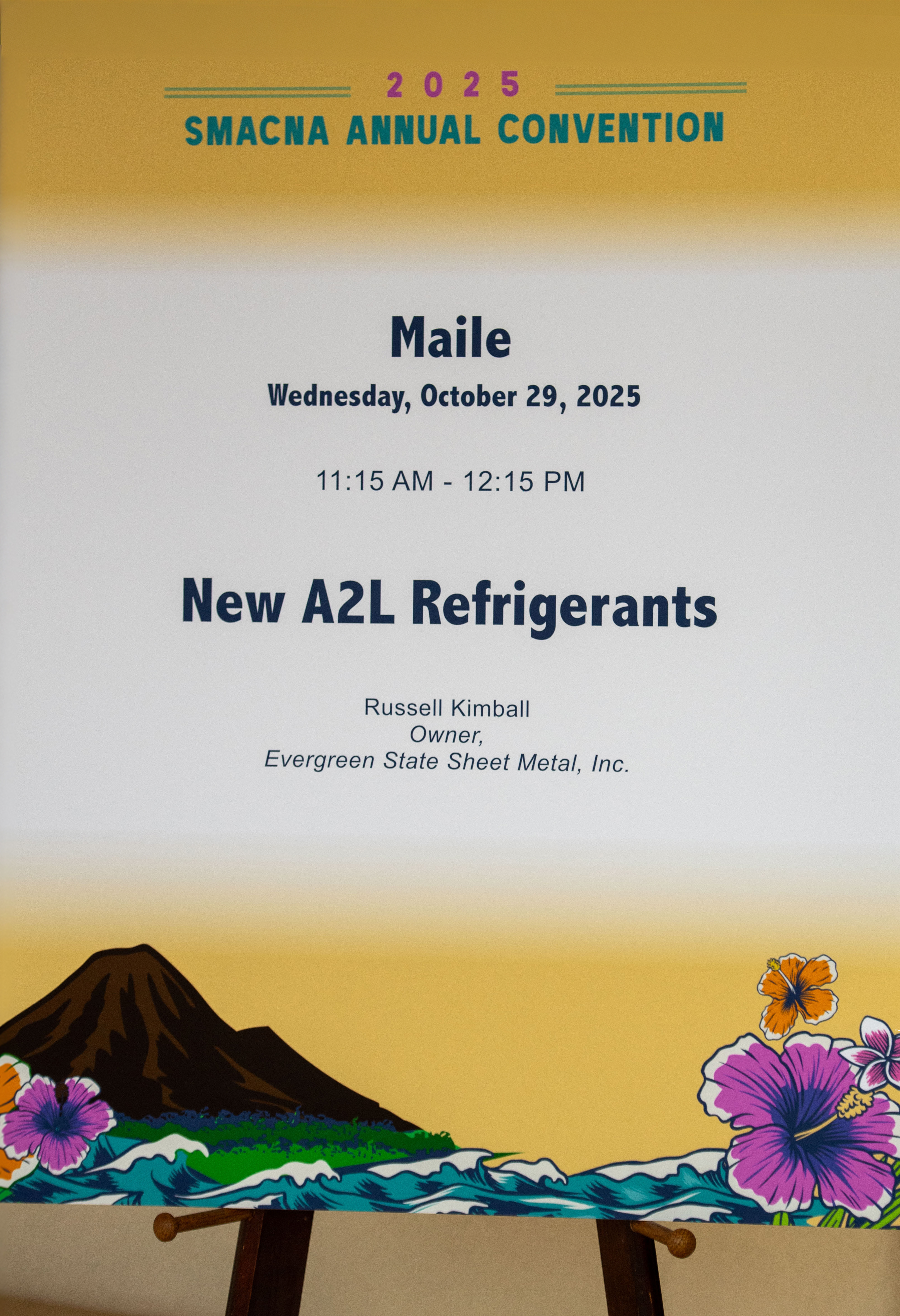
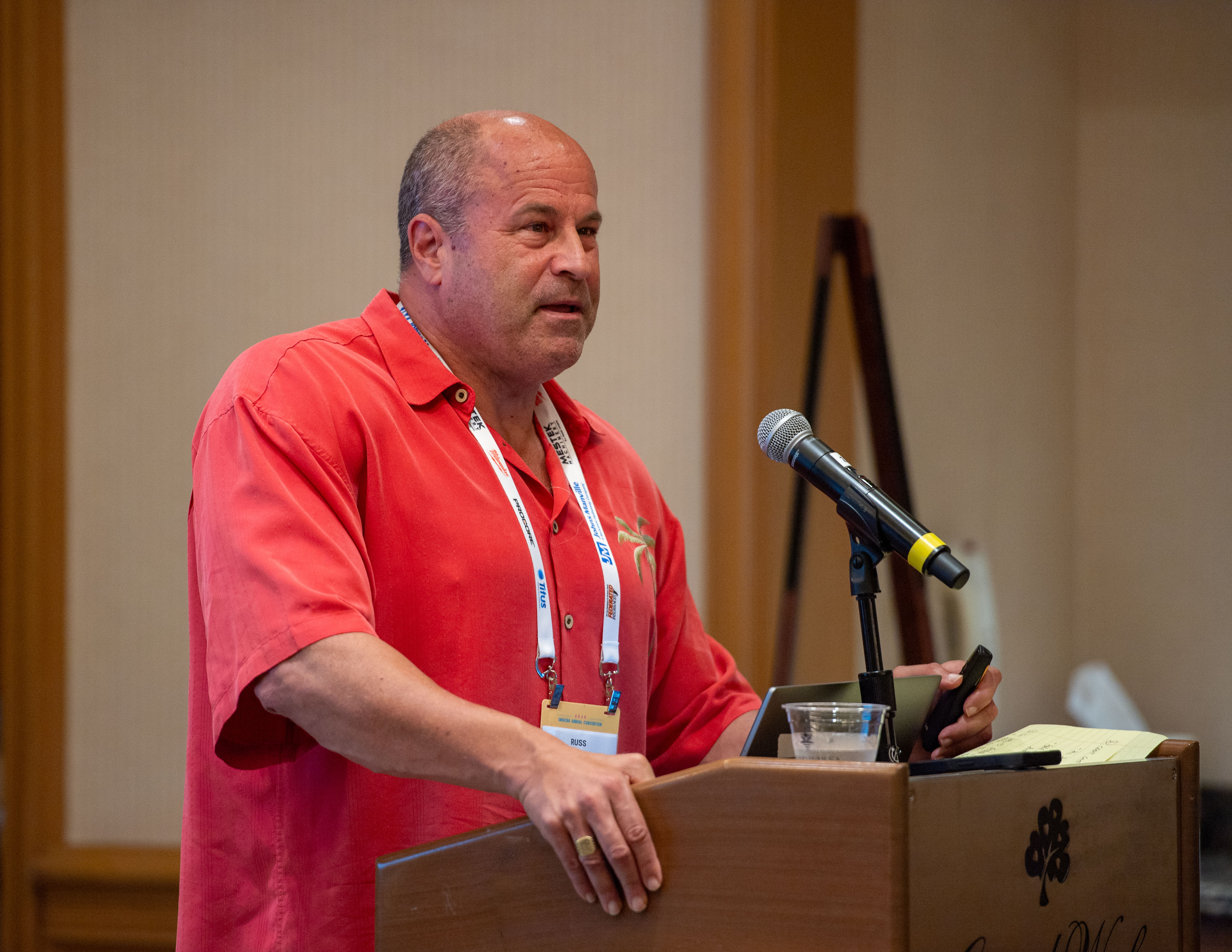 Residential HVAC contractors must prepare for sweeping changes as the industry shifts toward A2L refrigerants, driven by federal mandates aimed at reducing environmental impact, according to Russell Kimball, Owner of Evergreen State Sheet Metal Inc. in Everett, Washington.
“I’m already a year ahead in converting to A2L systems,” Kimball says. His foresight is underscored by ongoing regulatory changes that he warns could render some present-day information obsolete by next year.
The impetus for this transition centers on the Global Warming Potential (GWP) targets set by the American Innovation & Manufacturing (AIM) Act, which gave the Environmental Protection Agency authority to phase down hydrofluorocarbons (HFCs) such as R410A, currently used in all manufactured residential air conditioners and heat pumps.
“We’re phasing down R410A, which has a GWP of 2088, and replacing it with lower-GWP refrigerants like R32 and R454B, which have GWPs of 675 and 467, respectively,” says Kimball, whose company was established in 1968, providing HVAC, electrical repair, installation, and maintenance services for residential homes and commercial businesses. This phasedown introduces new challenges, with states such as California, Washington, and New York moving faster than federal schedules due to stricter emissions laws.
blower fans for dissipation. He also alerts contractors to expect equipment prices to rise by about 20%, driven by necessary electrical redesigns and safety features, rather than the usual 7% increase in metal costs. “These extra costs reflect the complexity of redesigning indoor and outdoor components to meet new safety labeling and risk-of-fire protocols,” Kimball says.
Kimball stresses that the transition demands new tooling and enhanced training. “We still use recovery machines, vacuum pumps, and leak detection tools like before, but continuing education is key since there isn’t an EPA A2L certification yet,” he says. Contractors must maintain their EPA 608 licenses, but are encouraged to deepen their expertise through ongoing education.

Job site testing is more involved as well, with fire-offs, nitrogen sweep,s and pressure testing becoming part of the normal procedure. “Leaks are even bigger setbacks now due to the flammability concerns,” Kimball warns.
Navigating safety codes and building requirements around A2L refrigerants presents a steep learning curve. Kimball acknowledges this is “a complex topic, highly technical and evolving beyond my core expertise,” but urges contractors to stay informed. Mechanical room ventilation, refrigerant alarm systems, and compliance with new truck refrigerant load limits (maximum 225 pounds per vehicle) are among the heightened safety protocols.
New storage rules are coming as well. Cylinders containing A2L refrigerants must be kept outside offices and shops, and record-keeping thresholds will be lowered from 50 pounds to 15 pounds starting in 2028. “Updated labeling and safety protocols will be necessary across all equipment,” he says.

For customers, Kimball addressed the changes in a blog post on his website, explaining what the shift means, how costs may differ, and what customers can do based on the types of existing systems they have. Transparency keeps communication lines open with customers and helps to answer any questions or concerns they have, he says.
transitions.
Published: January 12, 2026
IN THIS ISSUE
A Journey Built on Opportunity: SMACNA’s New President Looks Ahead
Aloha, everyone. It means the world to me to serve as your 2025-2026 SMACNA National President.
Appeals Court Upholds Minnesota's Construction Worker Misclassification Law
On Oct. 24, the U.S. Court of Appeals for the Eighth Circuit issued a decision that should be viewed as a meaningful victory for responsible union construction contractors.
ARCHITECTURAL: Stainless Spires Rise Above the River
Budde Sheet Metal Works crafts soaring eagle-wing spires, blending old-school expertise and next-gen training for Dayton’s New Law Enforcement Memorial that honors fallen officers.
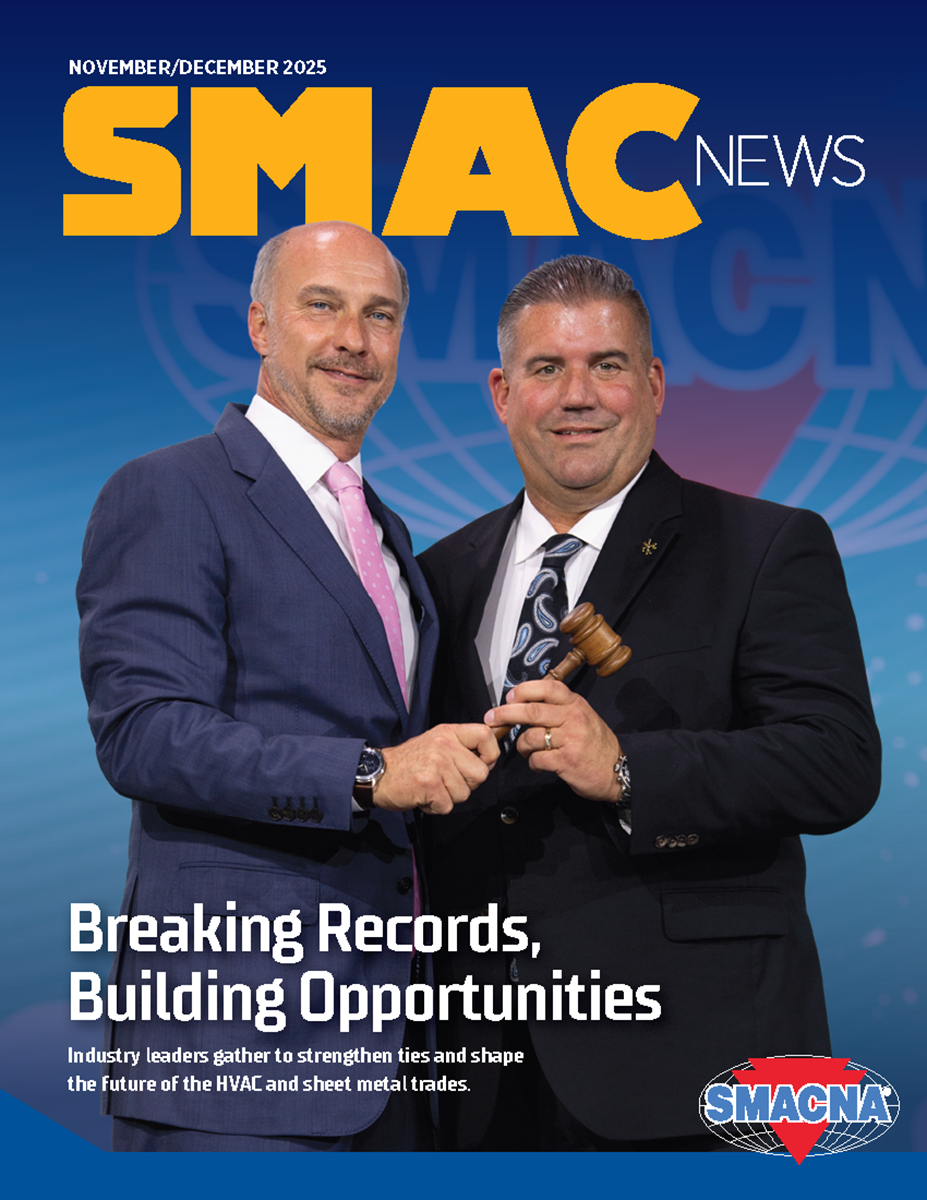
Breaking Records, Building Opportunities
Industry leaders gather to strengthen ties and shape the future of the HVAC and sheet metal trades.
HVAC: Flying High Again
SMACNA member W.G. Tomko’s work on the redesigned mechanical systems at Pittsburgh International Airport was key to the $1.7-billion renovation project.
INDUSTRIAL: Forging the Future of Industrial Sheet Metal
Family-founded and future-focused, Vidimos Inc. stakes its reputation on precision, flexibility and a commitment to craftsmanship.
Navigating Tariffs, Tax Incentives, and Workforce Priorities
On going legislative developments and regulatory actions at the federal level continue to shape the competitive landscape, costs and project opportunities for HVAC and sheet metal contractors.
On the Front Lines of Policy
Congressman Ed Case talks defense, dysfunction and the future of America’s builders.
P1 Construction Sets New Benchmark in Construction Safety with Dual Innovation Programs
SMACNA’s 2025 Safety Innovator of the Year creates a safer, more supportive culture for workers.
Raising the Bar in Brazil
Inside SMACNA Brazil’s mission to bring quality HVAC and cleaner air to the forefront.
RESIDENTIAL: On the Brink of Change
How one residential HVAC contractor has been preparing for the A2L refrigerants transition.
The Majority of SMACNA Members Need a CTO
Conferences across construction and fabrication are full of talk about analytics, metrics and KPIs.
The ROI of AI in Construction: A Financial Perspective
Contractors are increasingly presented with AI-powered tools marketed to boost efficiency and reduce risk.
Uncertainty is the New Normal
Economist Rebecca Patterson warns that tariffs will rise and AI will reshape work as the economy enters uncharted territory.
Welcome New SMACNA Members
When the Sky Isn't the Limit
Colonel Nicole Malachowski shows SMACNA how courage, change and gratitude can take leaders further than altitude ever could.
Privacy Policy |
Terms of Use | Contact Us
Phone: 703.803.2980 | Email:
info@smacna.org
© 1998-2026 SMACNA. All rights reserved.
Web Design & Development by Matrix Group
International, Inc.
