HVAC: Rewiring the Legacy
How a third-generation contractor is blending craftsmanship and code to keep Western Sheet Metal competitive in an industry racing toward automation.
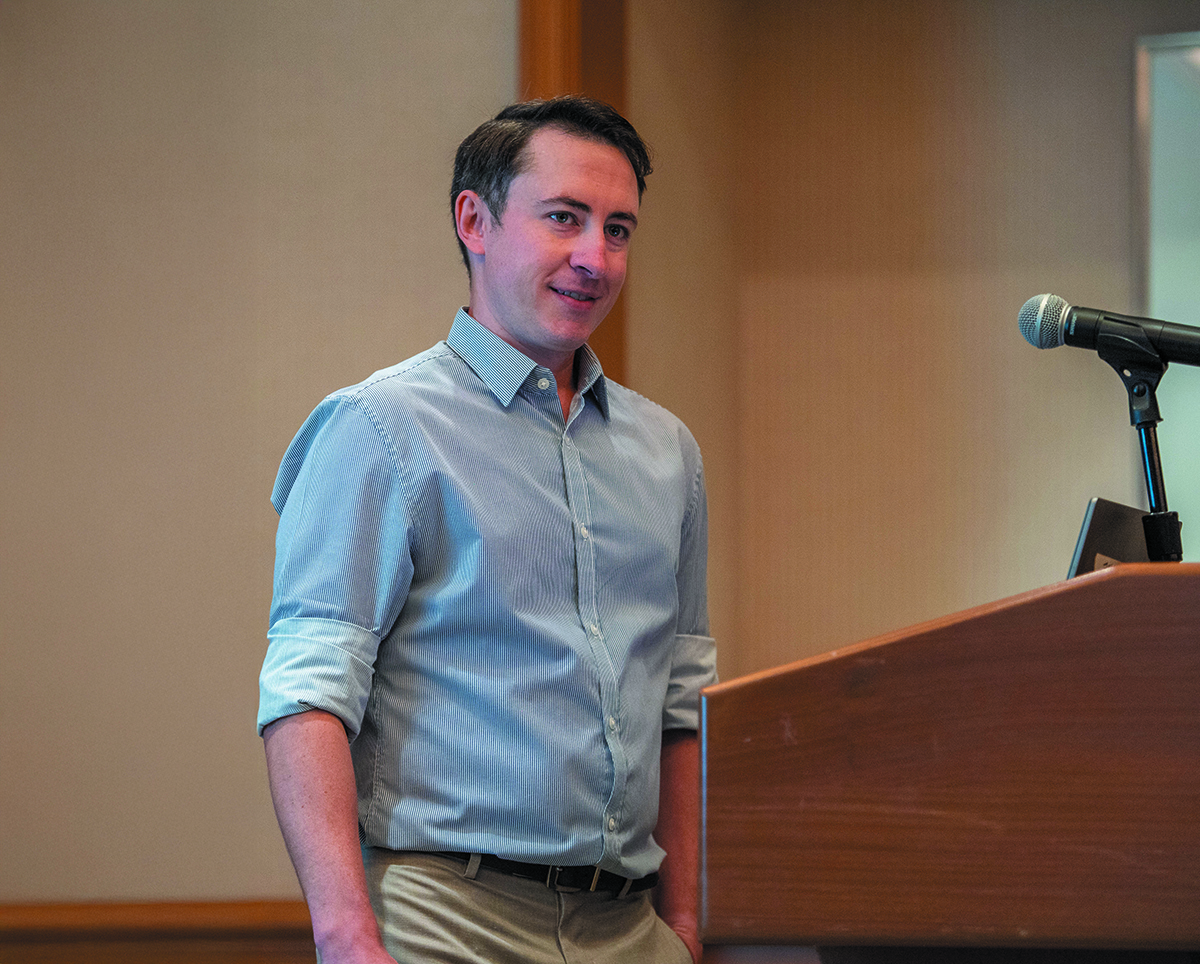 In the rapidly evolving world of HVAC and sheet metal contracting, one family-owned business stands at the crossroads of tradition and technology.
Western Sheet Metal's evolving technologies now include CAD/CAM estimating, fiber laser machine integration, project management solutions and centralized communication through the Microsoft 365 ecosystem.
Western Sheet Metal Inc., founded in 1968 in Salt Lake City, Utah, has built its legacy on precision fabrication and reliable service over more than five decades. Yet, the company is not resting on its laurels. Instead, it is boldly embracing a digital transformation journey to meet the profound workforce and technological challenges reshaping the industry.
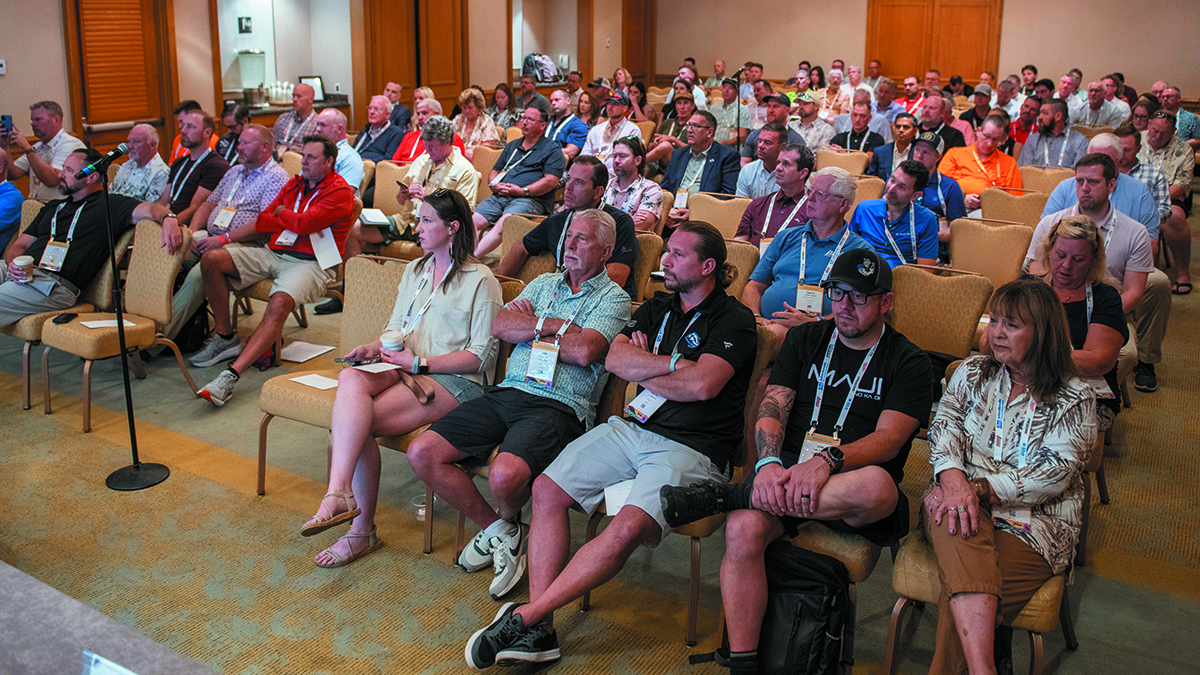
For Garrett Montrone, Project Manager and third-generation leader at Western Sheet Metal, the company’s “why” for change is clear and deeply personal. “We encountered a workforce crisis with 90% of SMACNA contractors facing labor shortages and half of our HVAC workforce over the age of 45,” he says. “New workers demand modern digital tools to thrive.”
Montrone emphasizes the urgency. “By 2030, 70% of workers will require advanced tech skills,” he says. “The cost of waiting is catastrophic.”
Montrone’s perspective comes from both heart and firsthand experience. He recalls joining the family company after working at Goldman Sachs. “I went from Wall Street to running a plasma table,” he says. “And, one day, the machine cut right through all the fittings it had just made. The foreman shrugged and said, ‘Yeah, sometimes that happens.’ We opened this dusty, old binder for troubleshooting that hadn’t been touched in 20 years. The number to call for support? That company had been out of business for a decade.”
That moment of inefficiency and obsolescence stuck with him. “There was no troubleshooting, no plan, no support. That was the wake-up call; it was the perfect example of why modernization wasn’t optional.”
Western Sheet Metal’s response became a comprehensive software adoption strategy based on empowerment more than technology. “My background as a sheet metal journeyman combined with IT experience helped us implement software rollouts that future-proof our business,” Montrone says. “But it’s not just about buying software. It’s about embedding long-term philosophy and showing your workers that you’re investing in the future.”
A Strategic Software Rollout with Heart
The company’s approach was structured but human-centered: a 10-step game plan with a 90-day rollout timeline designed to modernize operations without overwhelming its workforce. The roadmap began with defining clear outcomes, mapping current processes and selecting software solutions that aligned with real goals.
“Software adoption is about winning hearts, not just licenses,” Montrone says. “We built champions among respected team members to lead change and started small so we could adjust workloads without disruption.”
That measured rollout has paid off. Western Sheet Metal’s evolving tech stack now includes CAD/CAM estimating, fiber laser machine integration, project management solutions and centralized communication through the Microsoft 365 ecosystem. Backup systems protect operations by maintaining both paper and digital redundancy.
The key to success, Montrone emphasizes, is trust. “In our industry, you can’t force adoption; the moment you do, you lose buy-in,” he says. “But when people see the data working for them — fewer errors, faster turnaround — they become advocates themselves.”
He also stresses the importance of preserving knowledge from veteran employees. “There are people who’ve worked here for 20 or 30 years whose skills can’t be replaced,” he says. “You have to capture that institutional knowledge before it walks out the door. Create a wiki, record how things get done and turn that into living training material for the next generation.”
Overcoming Resistance and Looking Ahead
Change, however necessary, often meets emotional resistance, especially in multigenerational businesses. Montrone describes that dynamic candidly: “My grandpa started the company in a chicken coop after getting fired for doing side jobs. My dad led it through a technical revolution with a conservative mindset — by the book, steady. And then I come in from the tech world saying, ‘This is where the world’s headed.’ There were inevitable clashes, but also mutual respect. My dad’s been great: critical when things go wrong, but supportive enough to let me try.”
Western Sheet Metal’s core reasons for technology adoption reach beyond efficiency: improving employee work-life balance, reducing single points of failure, strengthening cross-training and centralizing communication to prevent major disruptions.
Today, the company logs all shop and field hours digitally, tracks projects through live dashboards monitoring cost and schedule adherence and integrates bid management and estimating workflows. “Data drives every decision now,” Montrone says. “It gives us clarity instead of chasing paper trails or relying on one person’s memory.”
For Montrone, the transformation is less about machines than mindset. “Technology has taken over our lives. You looked at your phone 30 times today without realizing it. So why not use that same familiarity to your advantage in business?” he asks. “I just want to raise the alarm: the future’s here. In five years, if you haven’t started adapting, it might be too late.”
Looking forward, Montrone is optimistic but pragmatic. “We’re exploring AI analytics, prefabrication automation, IoT integration and data security while balancing openness and collaboration. The key is continuity; how do you pass on legacy while evolving it?”
In the end, he returns to the value of legacy — the same family story that began in a Utah farmhouse in 1968. “For me, it’s not about the money,” Montrone says. “It’s about carrying on what my grandpa started: an honest trade, an American dream built from nothing. Now it’s our turn to make sure that dream survives the digital era.”
Published: March 6, 2026
IN THIS ISSUE
ARCHITECTURAL: How Automation is Reshaping Metalcraft
As robotic welders take their place beside skilled craftsmen, Poynter shows how automation is not erasing the human touch. Instead, it’s amplifying it, redefining what’s possible in modern architectural metalwork.
Government and Public Affairs Issues Update
Last year, the Government Affairs Department quietly but effectively worked diligently to produce significant legislative victories on behalf of SMACNA members.
How Contractors Can Avoid Three Common Mistakes During Periods of Growth
Periods of growth are exciting for any contractor, indicating strong demand and the opportunity to expand into new markets, larger projects or project types.
HVAC: Rewiring the Legacy
How a third-generation contractor is blending craftsmanship and code to keep Western Sheet Metal competitive in an industry racing toward automation.
INDUSTRIAL: Rethinking Project Management
How to know when it’s time to upgrade from a patchwork of manual tracking tools to a disciplined, digital backbone.
Ins and Outs of Automation
As we kick off 2026, AI and automation continue to be hot topics across many industries, and construction is no exception.
LAX’s Modular Marvel Takes Flight
Imagine nine massive concourse modules, each the size of a football field, creeping across Los Angeles International Airport’s tarmac at dawn, like gigantic puzzle pieces sliding into place.
Meet SMACNA’s New President Todd Hill
Ventcon’s innovator leads SMACNA in 2026. In the humming workshops of Troy, Michigan, where sheet metal bends to the will of skilled hands, Todd Hill has forged an impressive career.
Ninth Circuit Clarifies the Scope of the “Building and Construction Industry” Exemption for Withdrawal Liability
On Jan. 5, the U.S. Court of Appeals for the Ninth Circuit issued a decision relevant to union contractors.
PDX Terminal Expansion Brings Forest Canopy Over Concourses
Picture walking through Portland International Airport’s expanded main terminal, dappled light filtering through a 9-acre mass timber roof onto a grove of live trees below just like a Pacific Northwest forest sprouting right over security checkpoints.
Renaissance in the Steel City: PIT’s HVAC Revival
Imagine stepping into Pittsburgh International Airport’s (PIT) reborn terminal, where the ghost of its 1990s “airport of the future” glory hums anew, minus the unused gates and empty shops but brimming with streamlined efficiency.
RESIDENTIAL: Boost Your Residential HVAC Business with Social Media
Unlock the power of social media with practical strategies designed to grow your business, deepen customer relationships and stand out in a competitive market.
Strengthening Labor Harmony and Industry Bonds
SMACNA's New CEO talks about his vision for the association and why labor relations are a bedrock of any construction-aligned association.
TESTING ADJUSTING AND BALANCING: Certifying Medical-Grade HVAC Performance in a New Hospital Tower
SMACNA TAB contractor Northstar Environmental is ensuring that the HVAC system at a soon-to-open Pittsburgh hospital expansion meets the facility’s stringent expectations.
The Connector: How Frank Wall’s Collaborative Vision is Shaping SMACNA’s Next Era
When Frank Wall steps into a room, he carries more than four decades of industry experience.
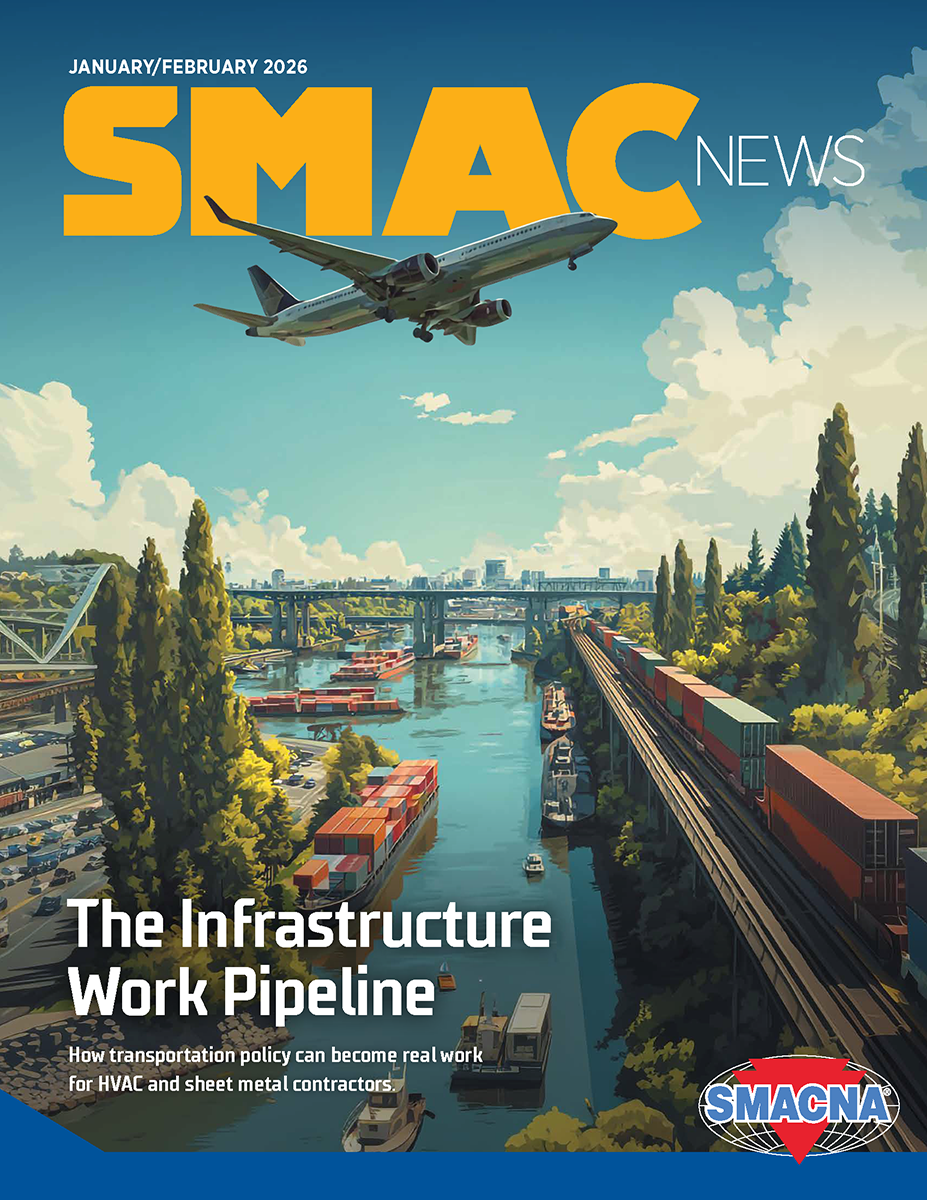
The Infrastructure Work Pipeline
How transportation policy can become real work for HVAC and sheet metal contractors.
Welcome New SMACNA Members
Where Craft Meets Character
B.J. Giri never chased the spotlight. Instead, the 2025 SMACNA Contractor of the Year built a career and a company by listening first, mentoring deeply and proving that leadership in the trades is as much about people as it is about precision.
Privacy Policy |
Terms of Use | Contact Us
Phone: 703.803.2980 | Email:
info@smacna.org
© 1998-2026 SMACNA. All rights reserved.
Web Design & Development by Matrix Group
International, Inc.
