Where Craft Meets Character
B.J. Giri never chased the spotlight. Instead, the 2025 SMACNA Contractor of the Year built a career and a company by listening first, mentoring deeply and proving that leadership in the trades is as much about people as it is about precision.
 In the shadow of Seattle’s rainy skyline, where the hum of construction cranes blends with the Puget Sound’s tides, B.J. Giri stands as a quiet colossus of the trades.
Picture him on a jobsite at dawn, eyes sharp, exchanging a nod and a blueprint with a young apprentice. He’s not the type to bellow orders or chase headlines. Instead, he listens first, then builds systems that breathe life into buildings and forges careers that anchor families.
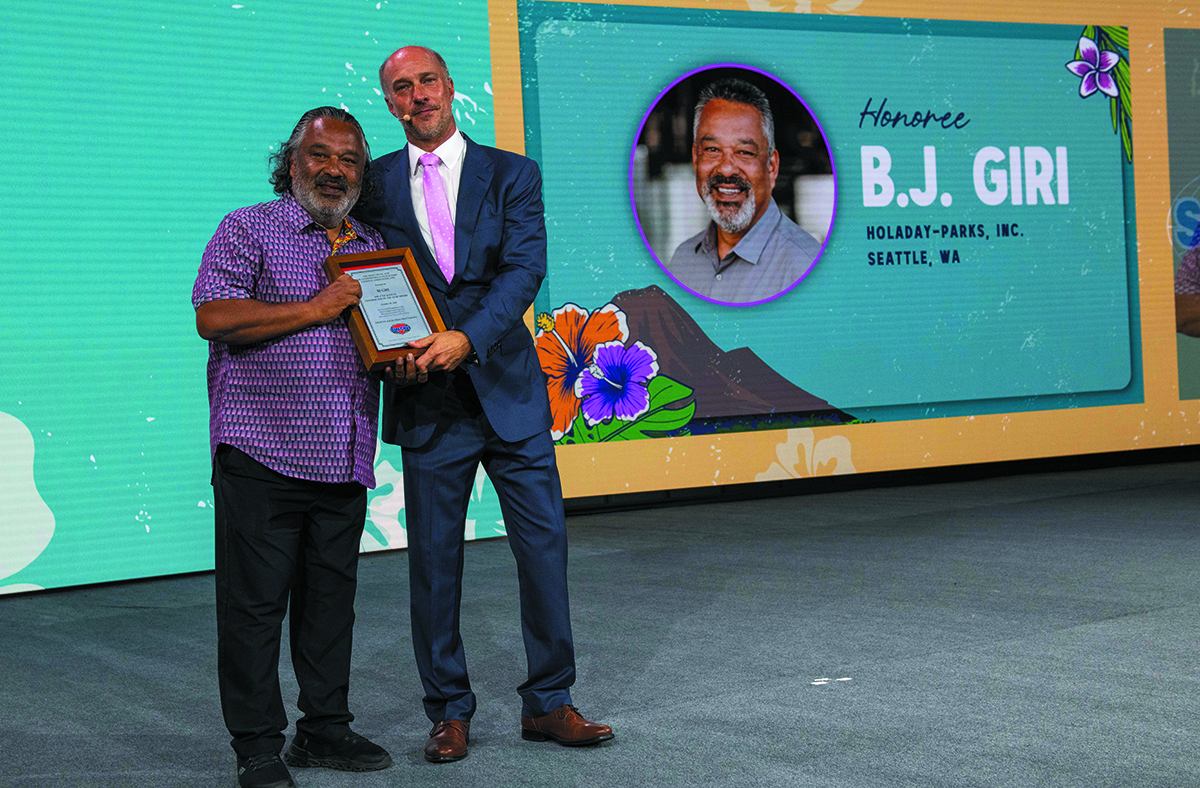
As the 2025 SMACNA Contractor of the Year, Giri, managing principal of Holaday-Parks Inc., embodies the grit and grace that have kept sheet metal and HVAC thriving since his unexpected entry into the industry more than 35 years ago.
Holaday-Parks, founded in 1889, traces its roots to an era when Seattle was transitioning from logging camp to booming port city. What began as a modest sheet metal shop has grown into a mechanical contracting powerhouse, employing over 400 across its Seattle/Tukwila hub and expansions into Alaska, Indiana, Virginia and Ohio. Giri didn’t inherit the firm; he earned his place rising through its ranks, transforming legacy craftsmanship into modern innovation.
His ascent mirrors the company’s: from hands-on fabricator to leader steering prefabrication breakthroughs, NIST cybersecurity certifications and energy-efficient HVAC systems that slash carbon footprints without skimping on performance. Colleagues call him a “bridge-builder,” blending kindness with a relentless drive.
Giri’s origin story in sheet metal wasn’t scripted. He entered the industry by accident during a random meeting while parking Owner Jerry Parks’ car when he was working in a downtown Seattle parking garage. Giri was at school earning his mechanical engineering degree. “He offered me a job in the engineering department,” he says, explaining that he worked in various capacities throughout his tenure there before he and his partners purchased the company prior to 2020. What hooked him? “How tangible the work was. Sheet metal and HVAC are trades where you can point to a finished job and say, ‘That works because I built it.’”
Early days brought the allure of variety. “It’s a mix of hands-on skill, problem-solving and teamwork. You’re never just doing one thing, and every jobsite teaches you something new,” he says, adding that pride in the work and mentoring people kept him motivated. “There were long days, tough conditions and times when it felt like nothing went right, but seeing a system come together and knowing a building would be comfortable and safe because of our work made it worth it. Over time, mentoring younger workers and passing on what I’d learned gave the job even more meaning. It stopped being just a trade and became a career I could stand behind.”
A pivotal moment crystallized his leadership. Early on, a project lagged amid trade tensions. Thrust into coordination, Giri saw chaos yield to clarity. “What stood out wasn’t the technical challenge, it was realizing how much communication and trust mattered,” he says. “When people felt heard and had clear direction, the job moved forward. When they didn’t, everything stalled.”
That forged his ethos. “A good leader doesn’t just know the work, they support the people doing it, stay calm under pressure and take responsibility when things get tough. Leadership is less about position and more about consistency, accountability and respect.”
Mentorship flows from deep roots. Giri credits his late father, who worked in a different field, for modeling integrity. “He was someone who led by example, showing the value of hard work and integrity. Doing the job right, even when no one is watching, is what builds trust and a lasting reputation. He also taught me the importance of patience and teaching others, taking the time to explain not just how to do something, but why it matters.”

Giri mirrors this with apprentices. “I try to pass on not only technical skills but also the values my father modeled: pride in skill, accountability and the understanding that leadership is about lifting others up, not just managing tasks,” he explains.
The Weight of the Crown
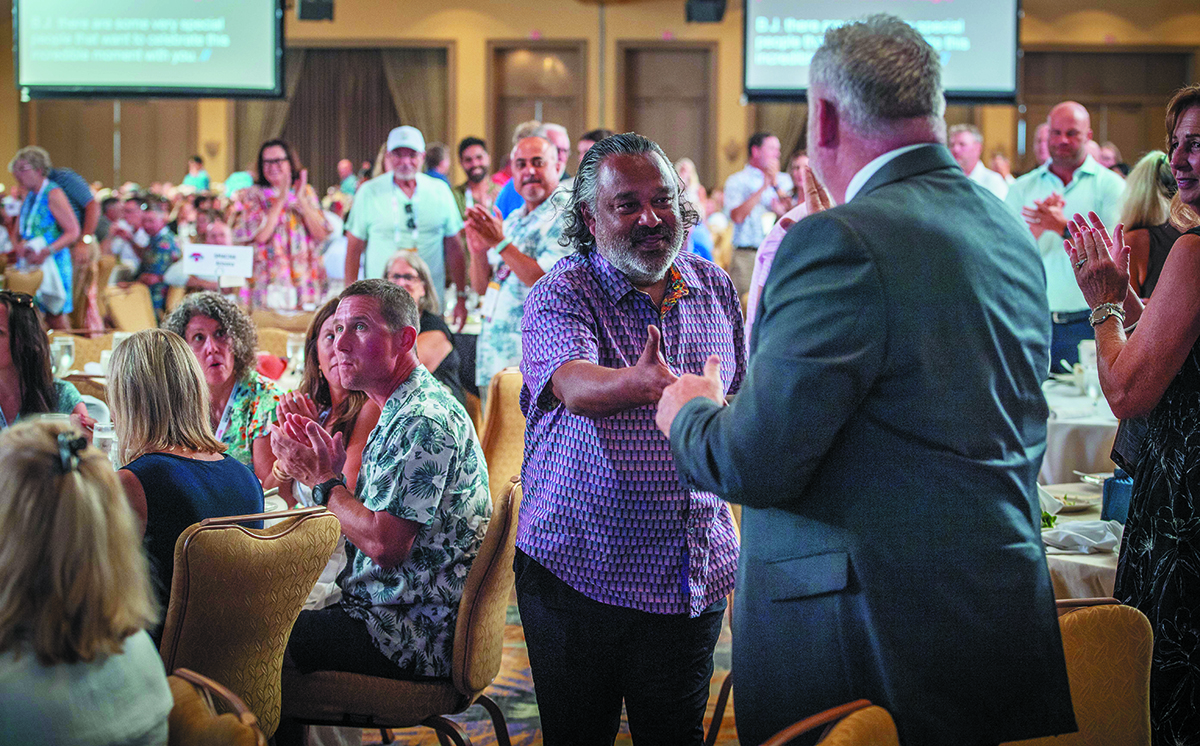
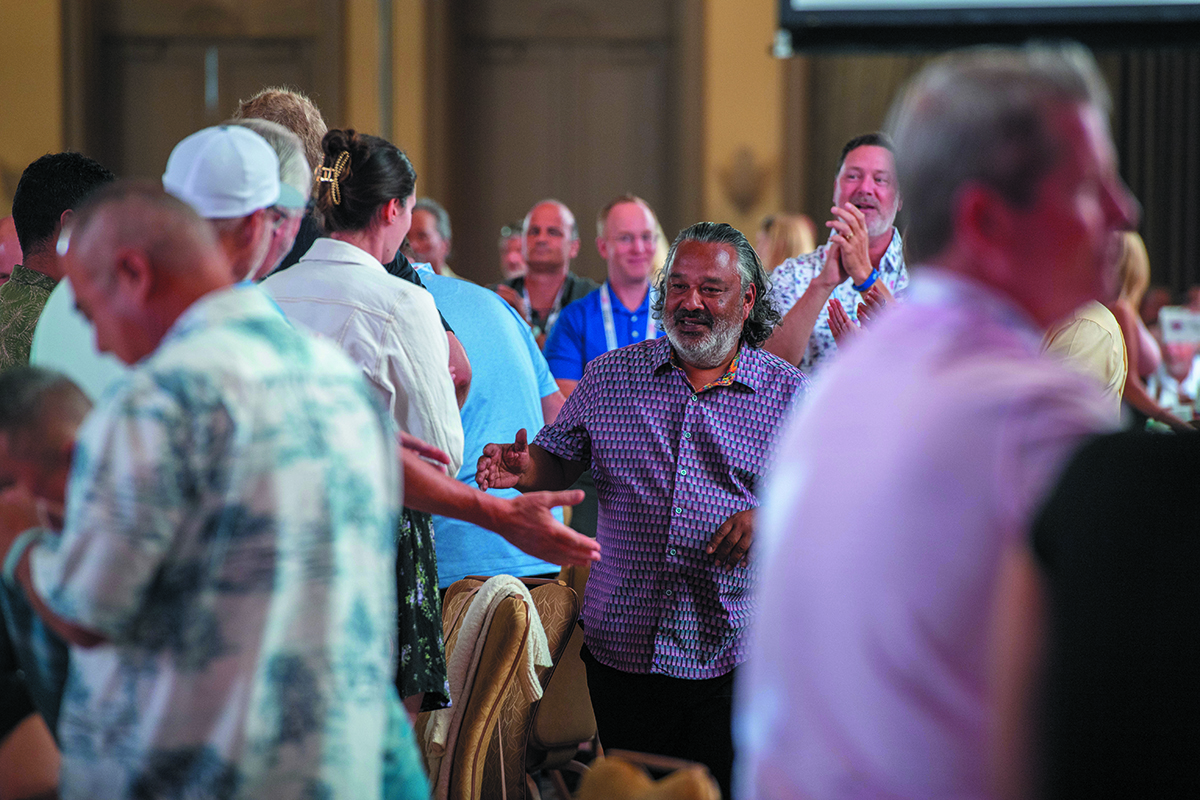
Winning SMACNA’s 2025 Contractor of the Year hit deep for Giri. “It’s incredibly meaningful, both personally and for everyone at Holaday-Parks,” he reflects. “On a personal level, it’s humbling. I’ve spent my career with people who take real pride in their craft, and this recognition reflects the lessons, mentorship and teamwork that shaped me along the way.”
SMACNA lauds his “innovative, collaborative and principled approach,” with SMACNA leadership noting, “B.J. brings remarkable energy to the industry, and his impact advancing our trade is clear. He has fostered a culture where employees thrive and clients feel valued.”
His service exceeds the jobsite: mentoring newcomers, backing apprenticeships and championing safety and collaboration. “I’ve always believed that serving the industry means giving more than what’s required on the jobsite,” he says. “Over the years, I’ve tried to promote our trade by mentoring those starting out, supporting apprenticeship and training programs, and encouraging people to take pride in doing quality work the right way, even when it’s not the easiest path.”
Colleagues peg Giri as kind and innovative for being “people-first” and grounded in respect. “Early in my career, I was very focused on the technical side, getting the work done and solving problems quickly,” he shares. “Over time, I learned that the best results come when you invest just as much in the people as you do in the process. Listening, being approachable and treating everyone with dignity goes a long way.”
Evolution meant blending that with progress. “We pair that practice with innovation by being open to new ideas, better technology and different ways of doing things, while still respecting the fundamentals of the trade,” he says. “Today, my focus is on empowering others and creating an environment where people feel supported and challenged.”
Mentorship shines in stories like his protégé, now VP of Service. “Early on, he was eager and capable but didn’t have the experience in taking ownership of larger projects,” Giri says. “I worked with him closely, giving guidance, setting clear expectations and letting him make decisions while providing support when needed. Over time, I watched him grow into a leader who can manage complex teams and high-pressure situations with skill and confidence.”
The takeaway? “Leadership isn’t about telling people what to do; it’s about creating an environment where they feel empowered to rise to the challenge. Seeing someone you’ve mentored succeed at that level is one of the most rewarding parts of the job.”
In a modern firm, Giri says effective mentorship balances “teaching and trust ... sharing real-world experience, setting clear expectations and being honest about mistakes (your own included), while also encouraging curiosity, innovation and new ideas, as well as creating pathways for advancement and making sure the next generation sees a future in the industry.”
Building an Inclusive Legacy
Diversity isn’t rhetoric at Holaday-Parks; it’s action. It’s about “broadening how and where we recruit — partnering with schools, apprenticeship programs and community organizations to reach people who may not have traditionally seen the trades as an option,” Giri says. It’s “focusing on skills, work ethic and potential, not just background.”
Internally, it’s about “building a culture where everyone feels respected and supported,” he shares. “That includes having expectations around professionalism, safety and training programs, mentorship opportunities and making sure people have a voice. We also invest in leadership development so opportunities for advancement are accessible, and we hold ourselves accountable to this.”
His experience as a member of SMACNA Western Washington sharpened this. “It’s given me the opportunity to learn from peers, share challenges and see how decisions at the industry level impact contractors, labor and clients,” Giri says. “Discussions around safety, workforce development, technology and market trends have directly influenced how we plan, invest and adapt, reinforcing the importance of collaboration. When contractors work together to raise standards, everyone benefits.”
Labor partnerships fuel his edge. “A strong partnership with labor starts with mutual respect and open communication,” Giri says. “In practice, that means involving labor early, listening to field input and recognizing that the people doing the work often have the best insights into how to do it safely, efficiently and with quality. When labor is treated as a true partner — not just a resource — the entire project benefits.
“In our shop and on our projects, that partnership shows up through consistent training, a shared commitment to safety and clear expectations on both sides,” he continues. “We work closely on workforce planning, scheduling and problem-solving so issues are quickly addressed before they become setbacks. Most importantly, we build trust by being fair and communicative. That kind of relationship creates stability, improves performance and gives us a competitive edge in the market.
Embracing Innovation
Innovation honors Holaday-Parks’ 1889 legacy. The company has focused on innovation in technology, prefabrication, sustainability and project delivery, but “the biggest impact has come from integrating these areas together rather than in isolation,” Giri says. In technology, the company has invested in digital modeling, as well as BAS controls. “We have project management tools that improve coordination and reduce errors on the jobsite.” Giri adds. “In addition, we are well down the path of CMMC and NIST certifications. Prefabrication in our shop has allowed us to assemble components with greater precision, cutting field labor time and improving safety.
“On the sustainability side, we’ve collaborated with clients to design energy-efficient systems that meet strict environmental standards and re-doubled our commitment to lowering carbon emissions within our own company,” he adds. “In project delivery, we’ve refined processes that keep projects on schedule and under budget while still maintaining quality.”
The results? They speak for themselves, Giri explains, pointing to “faster project timelines, fewer costly mistakes, safer worksites and a reputation for reliability that strengthens both client trust and employee engagement. “It’s proof that innovation isn’t just about new tools,” Giri says. “It’s about smarter ways of doing work.”
Community and the Horizon
Being an active and positive part of the Seattle area is important for Holaday-Parks, which does this by supporting local organizations, schools and workforce programs that strengthen the trade and broaden the community. “Holaday-Parks shows up by investing in apprenticeship programs, sponsoring educational initiatives and volunteering time and expertise where it can have an influence,” Giri says. “We also prioritize local hiring and partnerships, helping build long-term relationships that benefit both the company and the community. To me, being present in the community is about creating opportunities, giving back and showing that we care about Seattle not just as a place to work, but as a place to invest in and support.”
Giri’s 10- to 15-year vision? A trifecta legacy: Holaday-Parks leading “with integrity, innovation and quality;” mentees carrying forward a “commitment to professionalism, continuous learning and respect for the trade;” and for the SMACNA community to get stronger through collaboration, shared knowledge, higher standards and expanding opportunities.
“If I’ve contributed to raising standards, expanding opportunities and helping the industry attract and retain skilled people,” he points out, “then I’ll feel like I’ve made a lasting and important difference beyond just my own company.”
Published: March 6, 2026
IN THIS ISSUE
ARCHITECTURAL: How Automation is Reshaping Metalcraft
As robotic welders take their place beside skilled craftsmen, Poynter shows how automation is not erasing the human touch. Instead, it’s amplifying it, redefining what’s possible in modern architectural metalwork.
Government and Public Affairs Issues Update
Last year, the Government Affairs Department quietly but effectively worked diligently to produce significant legislative victories on behalf of SMACNA members.
How Contractors Can Avoid Three Common Mistakes During Periods of Growth
Periods of growth are exciting for any contractor, indicating strong demand and the opportunity to expand into new markets, larger projects or project types.
HVAC: Rewiring the Legacy
How a third-generation contractor is blending craftsmanship and code to keep Western Sheet Metal competitive in an industry racing toward automation.
INDUSTRIAL: Rethinking Project Management
How to know when it’s time to upgrade from a patchwork of manual tracking tools to a disciplined, digital backbone.
Ins and Outs of Automation
As we kick off 2026, AI and automation continue to be hot topics across many industries, and construction is no exception.
LAX’s Modular Marvel Takes Flight
Imagine nine massive concourse modules, each the size of a football field, creeping across Los Angeles International Airport’s tarmac at dawn, like gigantic puzzle pieces sliding into place.
Meet SMACNA’s New President Todd Hill
Ventcon’s innovator leads SMACNA in 2026. In the humming workshops of Troy, Michigan, where sheet metal bends to the will of skilled hands, Todd Hill has forged an impressive career.
Ninth Circuit Clarifies the Scope of the “Building and Construction Industry” Exemption for Withdrawal Liability
On Jan. 5, the U.S. Court of Appeals for the Ninth Circuit issued a decision relevant to union contractors.
PDX Terminal Expansion Brings Forest Canopy Over Concourses
Picture walking through Portland International Airport’s expanded main terminal, dappled light filtering through a 9-acre mass timber roof onto a grove of live trees below just like a Pacific Northwest forest sprouting right over security checkpoints.
Renaissance in the Steel City: PIT’s HVAC Revival
Imagine stepping into Pittsburgh International Airport’s (PIT) reborn terminal, where the ghost of its 1990s “airport of the future” glory hums anew, minus the unused gates and empty shops but brimming with streamlined efficiency.
RESIDENTIAL: Boost Your Residential HVAC Business with Social Media
Unlock the power of social media with practical strategies designed to grow your business, deepen customer relationships and stand out in a competitive market.
Strengthening Labor Harmony and Industry Bonds
SMACNA's New CEO talks about his vision for the association and why labor relations are a bedrock of any construction-aligned association.
TESTING ADJUSTING AND BALANCING: Certifying Medical-Grade HVAC Performance in a New Hospital Tower
SMACNA TAB contractor Northstar Environmental is ensuring that the HVAC system at a soon-to-open Pittsburgh hospital expansion meets the facility’s stringent expectations.
The Connector: How Frank Wall’s Collaborative Vision is Shaping SMACNA’s Next Era
When Frank Wall steps into a room, he carries more than four decades of industry experience.
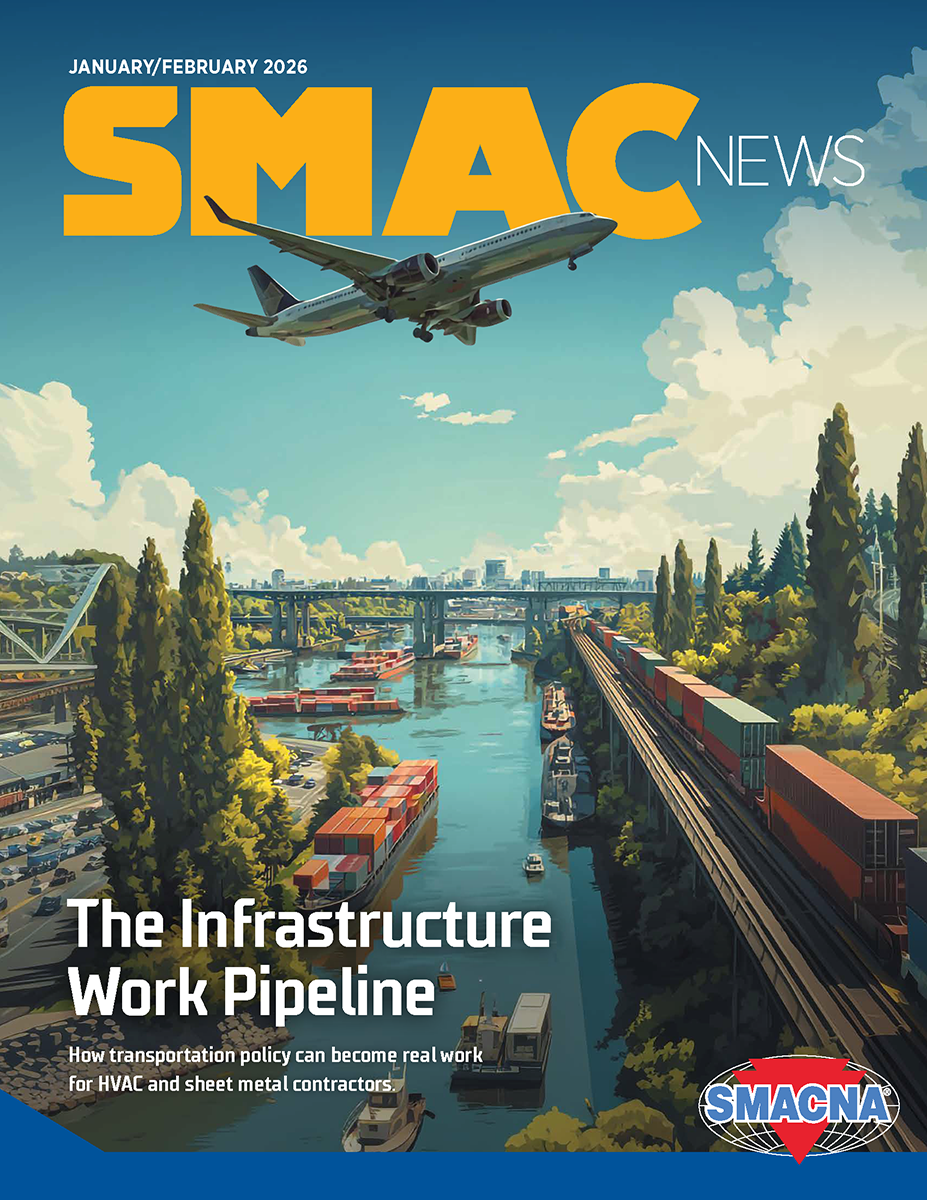
The Infrastructure Work Pipeline
How transportation policy can become real work for HVAC and sheet metal contractors.
Welcome New SMACNA Members
Where Craft Meets Character
B.J. Giri never chased the spotlight. Instead, the 2025 SMACNA Contractor of the Year built a career and a company by listening first, mentoring deeply and proving that leadership in the trades is as much about people as it is about precision.
Privacy Policy |
Terms of Use | Contact Us
Phone: 703.803.2980 | Email:
info@smacna.org
© 1998-2026 SMACNA. All rights reserved.
Web Design & Development by Matrix Group
International, Inc.
