Sonderling Visit Shows the Trades a Path Forward
Acting U.S. Labor Secretary Keith Sonderling visited Pennsylvania’s Luzerne County Community College, where union contractors and educators made the case for apprenticeships, early recruitment and stronger career pathways in HVAC and sheet metal.
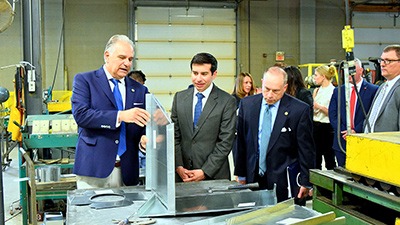
Acting U.S. Labor Secretary Keith Sonderling’s June 10 visit to Luzerne County Community College (LCCC) in Nanticoke, Pennsylvania, offered a familiar but timely message for HVAC and sheet metal contractors: the trades still work, but the pipeline must start earlier, train smarter and keep people longer.
At a roundtable inside the college’s Trades Building, workforce leaders, educators and SMACNA and SMART representatives talked about apprenticeships, technology, retention and the growing need to sell the trades as a modern, high-road career.
Sonderling says the most important thing communities can do is make sure local workers get the first shot at the jobs being created close to home. “The most important thing we can do, especially in Pennsylvania communities like this, is make sure the local workforce has the first and best opportunity to fill these jobs,” he says, adding that community colleges are uniquely positioned to help students stay in their communities, learn a trade and build a family-sustaining career without taking on unnecessary debt.
For contractors, that message landed squarely in familiar territory. The visit centered on PA Works, Pennsylvania’s statewide workforce strategy built around career and technical education, micro credentials and pre-apprenticeship programs. LCCC President John Yudichak says the state will need 300,000 skilled trade workers by 2030, and he cast community colleges as a critical partner in meeting that demand. Kelly O’Brien says the college is creating pathways that connect students, job seekers and employers, while Dr. Russ Bigus says LCCC’s training is designed to lead directly to employment and advancement.
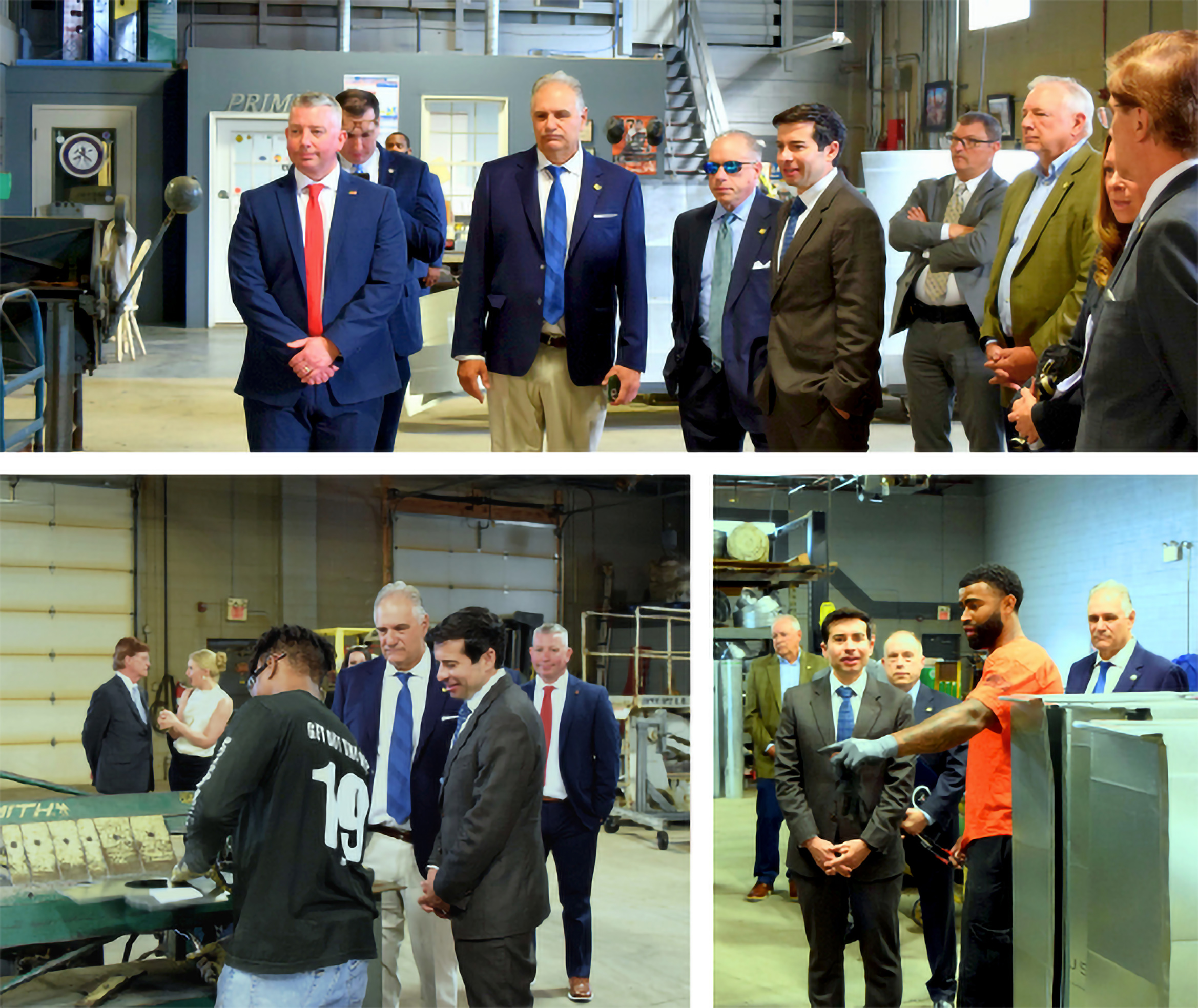
The roundtable also gave SMACNA and SMART leaders a chance to underline what is working in the field. Registered apprenticeships remain one of the industry’s most reliable workforce development tools, and early exposure through middle school, high school and pre-apprenticeship programs is increasingly seen as essential. The Heavy Metal Summer Experience was highlighted as a successful recruitment model, and veterans continue to represent a strong source of talent through programs such as Helmets to Hardhats and SMART Heroes. Participants also pointed to retention, mentorship and workplace culture as critical pieces of the workforce puzzle, especially as experienced workers retire and the industry loses hard-won institutional knowledge.
Technology was another major theme. The modern sheet metal career, participants said, now includes 3D modeling, automation, digital fabrication and AI literacy, making the trade more technical than ever. Prefabrication and offsite manufacturing were also noted as expanding quickly because they can improve efficiency, quality and safety. The message to young workers was clear: this is still a hands-on industry, but it is no longer just about hand tools and sheet metal snips.
The visit also highlighted a broader selling point contractors know well: the trades still offer a direct route to the middle class. John Weaver, an HVAC instructor at LCCC, told Sonderling that the field can provide a strong life for workers and their families. “It has provided all of us a great opportunity to provide very well for our families, and you’ll never be without a job,” Weaver says. “You can go anywhere in this country and find a job in any of these fields, and AI is not taking that away.” That line may end up being one of the most useful takeaways for contractors trying to recruit the next generation.
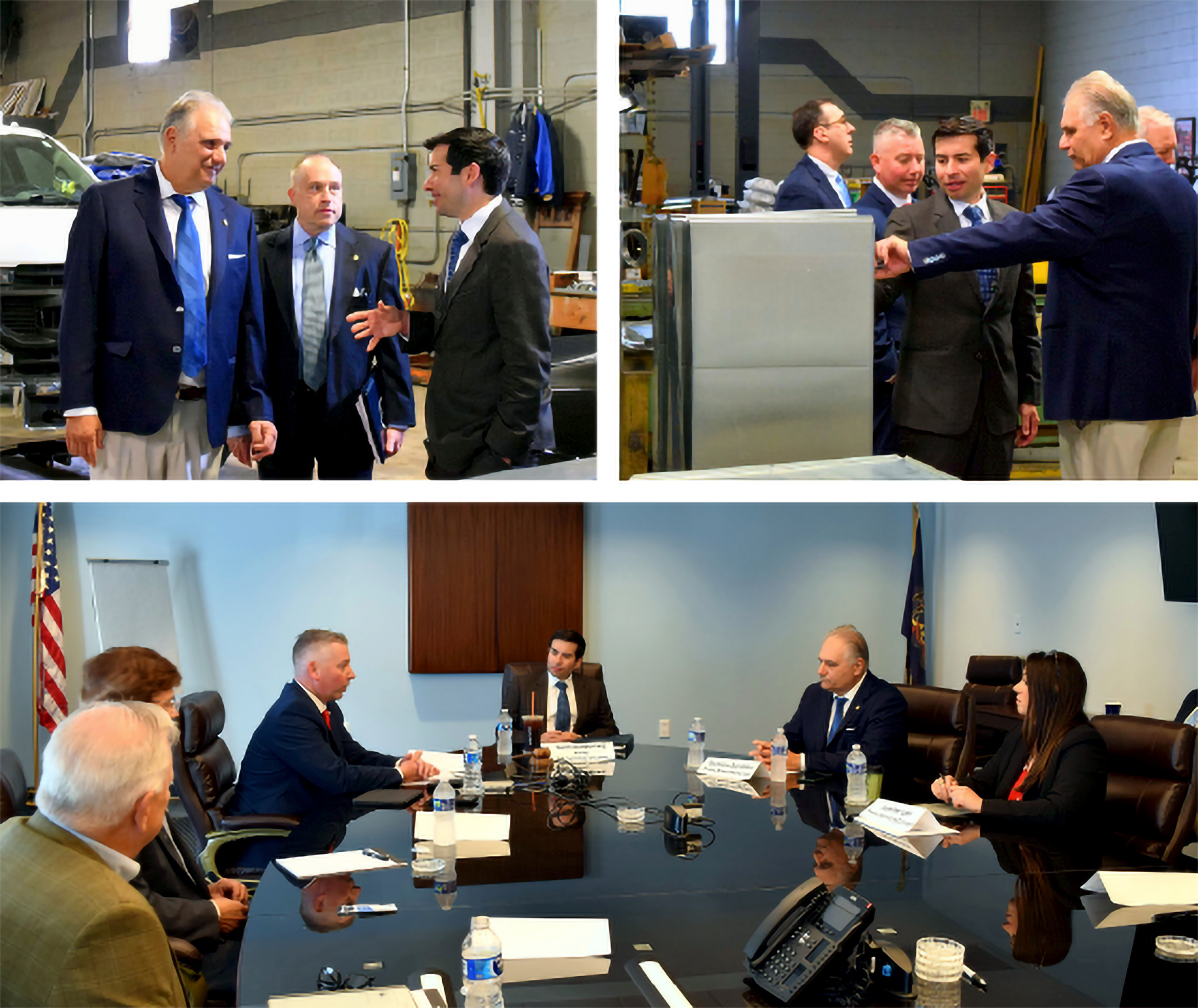
The roundtable included Stan Kolbe, SMACNA’s Executive Director of Government and Political Affairs; Pete Jenkins, Executive Director at Sheet Metal Contractors Association of Philadelphia & Vicinity; Dominic Bonitatis, Owner of Prime Sheet Metal Inc.; Ernie J. Menold, President of Ernest D. Menold Inc.; and Jennifer Lohr, Vice President of Fisher Balancing Co. Their presence reinforced the practical tone of the discussion, which is that the future of HVAC and sheet metal depends not only on recruiting more people, but on giving them good reasons to stay, grow and lead.
For contractors watching the labor market, the visit pointed to a simple conclusion. Apprenticeships still matter, community colleges still matter, and the trades still offer one of the clearest paths to a stable career, but the industry will need stronger partnerships, better messaging and a more modern training model to keep that promise alive.
Published: September 17, 2026
IN THIS ISSUE
Adapt to Remain Competitive
When I started as an apprentice 36 years ago, the sheet metal industry looked very different than it does today.
ARCHITECTURAL: Once in a Lifetime in Copper
Baker Group’s restoration of Iowa’s Webster County Courthouse involved a leaning clock tower, stamped rosettes from overseas and 10,000 hours of field work.
Capitol Hill Update: Housing Bill Could Speed HVAC Work
The bipartisan 21st Century ROAD to Housing Act may be more than a housing policy win.
Chapter Spotlight: How SMACNA St. Louis Built a Union Model That Still Works
Through rebate programs, training partnerships and close coordination with Local 36, the chapter has preserved market share and strengthened its contractor network.
Eli Howard Named SMACNA COO
SMACNA appointed Eli P. Howard, III as the organization’s new Chief Operating Officer.
I’ve Been Collecting All This Data. Now What?
Effective data management is the foundation of any successful data-driven initiative.
INDUSTRIAL: Inside the $100-Billion Micron Megafab Campus
As site work begins on one of the largest private construction projects in U.S. history, central New York’s sheet metal industry braces for an unprecedented test of capacity, timing and labor.
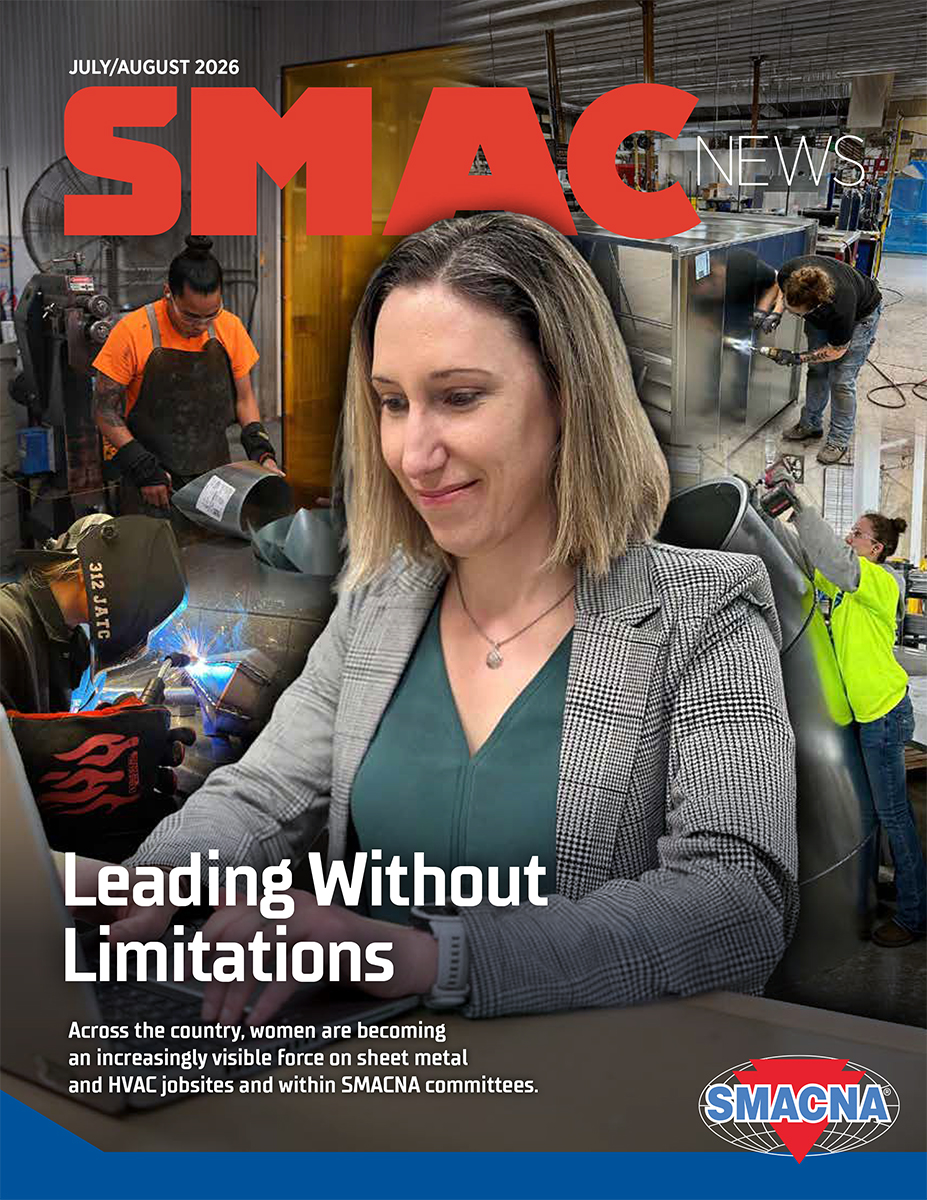
Leading Without Limitations
Across the country, women are becoming an increasingly visible force on sheet metal and HVAC jobsites and within SMACNA committees. These professionals talk about what it took to get in, stay in and start pulling others in behind them.
RESIDENTIAL: How One Illinois Contractor Turned Classic Trucks Into Marketing Machines
Mendel Plumbing & Heating’s themed fleet promotes everything from cancer awareness to local nonprofits, proving that community engagement can double as powerful advertising.
Sonderling Visit Shows the Trades a Path Forward
Acting U.S. Labor Secretary Keith Sonderling visited Pennsylvania’s Luzerne County Community College, where union contractors and educators made the case for apprenticeships, early recruitment and stronger career pathways in HVAC and sheet metal.
TESTING, ADJUSTING AND BALANCING: A Prescription for Healthy IAQ
SMACNA of Oklahoma member McIntosh Corp.’s TAB work helps patients, staff and visitors breathe clean air in a new Tulsa hospital tower.
Why Job Costing Still Breaks Margin Visibility for Construction Firms
Financial pressure in construction rarely appears all at once.
Privacy Policy |
Terms of Use | Contact Us
Phone: 703.803.2980 | Email:
info@smacna.org
© 1998-2026 SMACNA. All rights reserved.
Web Design & Development by Matrix Group
International, Inc.
