HVAC: 75 Years and Still Ahead of the Curve
Geauga Mechanical’s three-generation bet on innovation pays off in an historic Cleveland renovation.
 In 1950s Cleveland, Ohio, Ted J. Berman founded a family sheet metal business that specialized in residential heating, roofing and gutters. Seventy-five years later, Ted’s children and grandchildren have built his company into a major mechanical contractor. The secret to the firm’s longevity? Giving each generation the flexibility to change.
 “We’ve always had a culture of innovation and being willing to try things,” says Craig Berman, president and CEO of Geauga Mechanical. “When my grandpa started the business, he gave that second generation a lot of leeway to figure things out, to do things differently and to grow the business. When I got involved, it was the same mentality. Even though I was young, and they had been doing this a long time, if I had ideas to try out, they were open to that. The older generation lets us drive where the business goes next.”
The Bermans use this flexibility to embrace new technology. Geauga was one of the first Cleveland contractors to use electronic work tickets for the service department and one of the first to do 3D modeling. “In our market, we’re typically on the forefront of utilizing new technology,” Berman says. “Now it’s the way we’re doing 3D scanning, the way we do modeling, the way we do data analytics. We are far ahead of most of our peers.” The Bermans accept imperfect technologies when they see a potential payoff. “If we’re waiting for technology to be fully vetted, we’d never do anything, because it’s never perfect. We’ve never let things not being fully ready stop us from trying something new, especially if it’s going to make us better.”
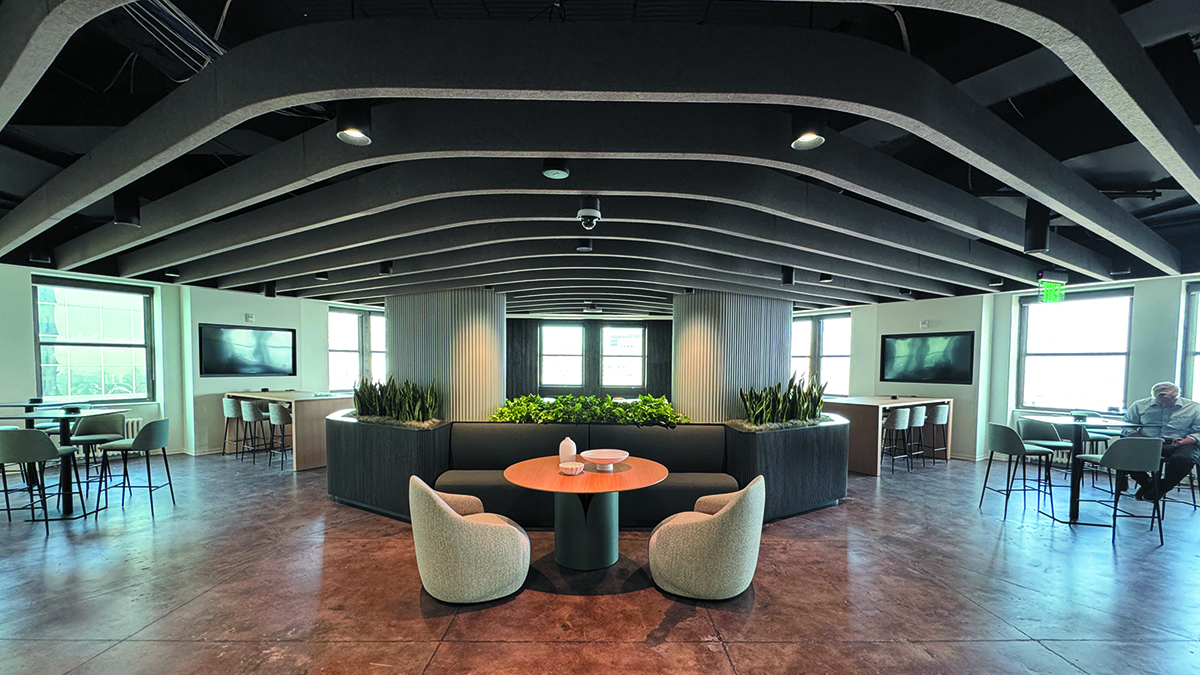
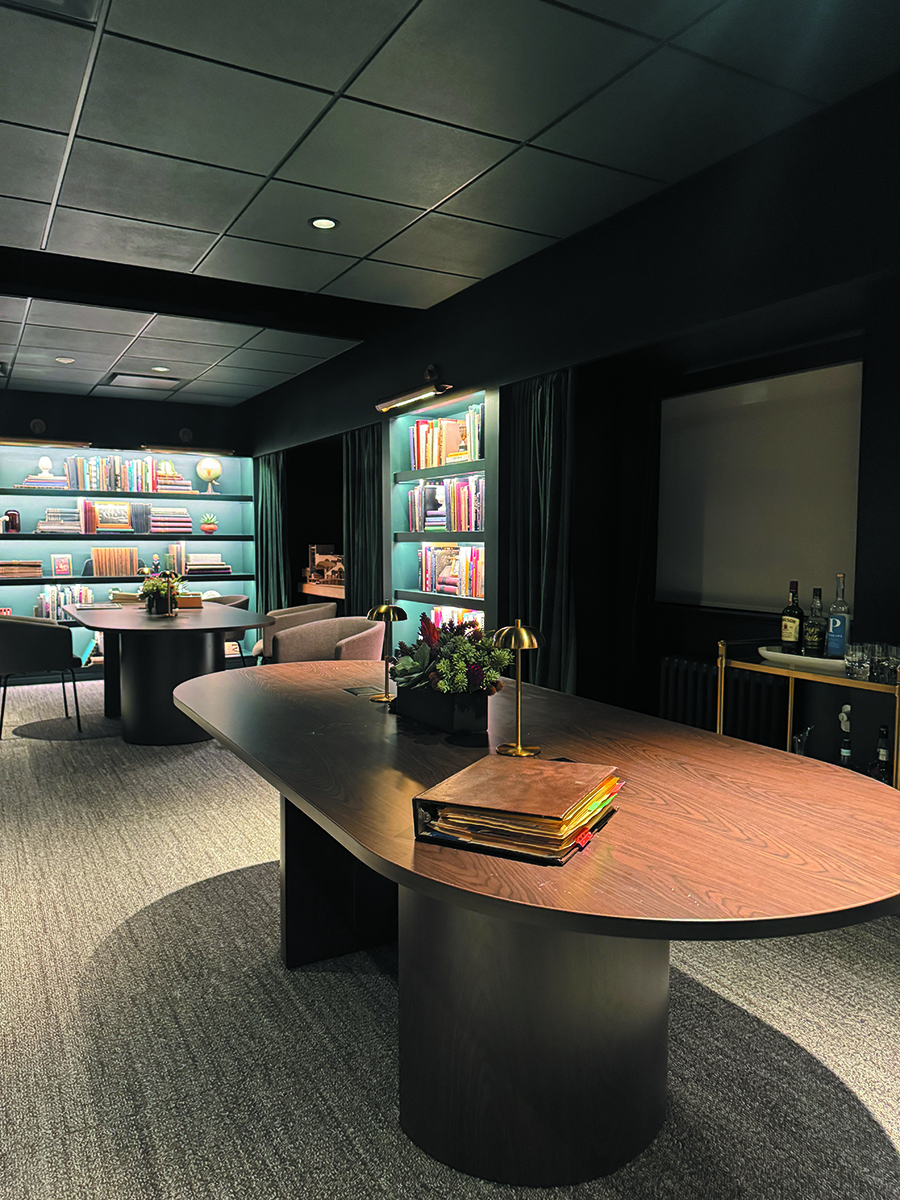
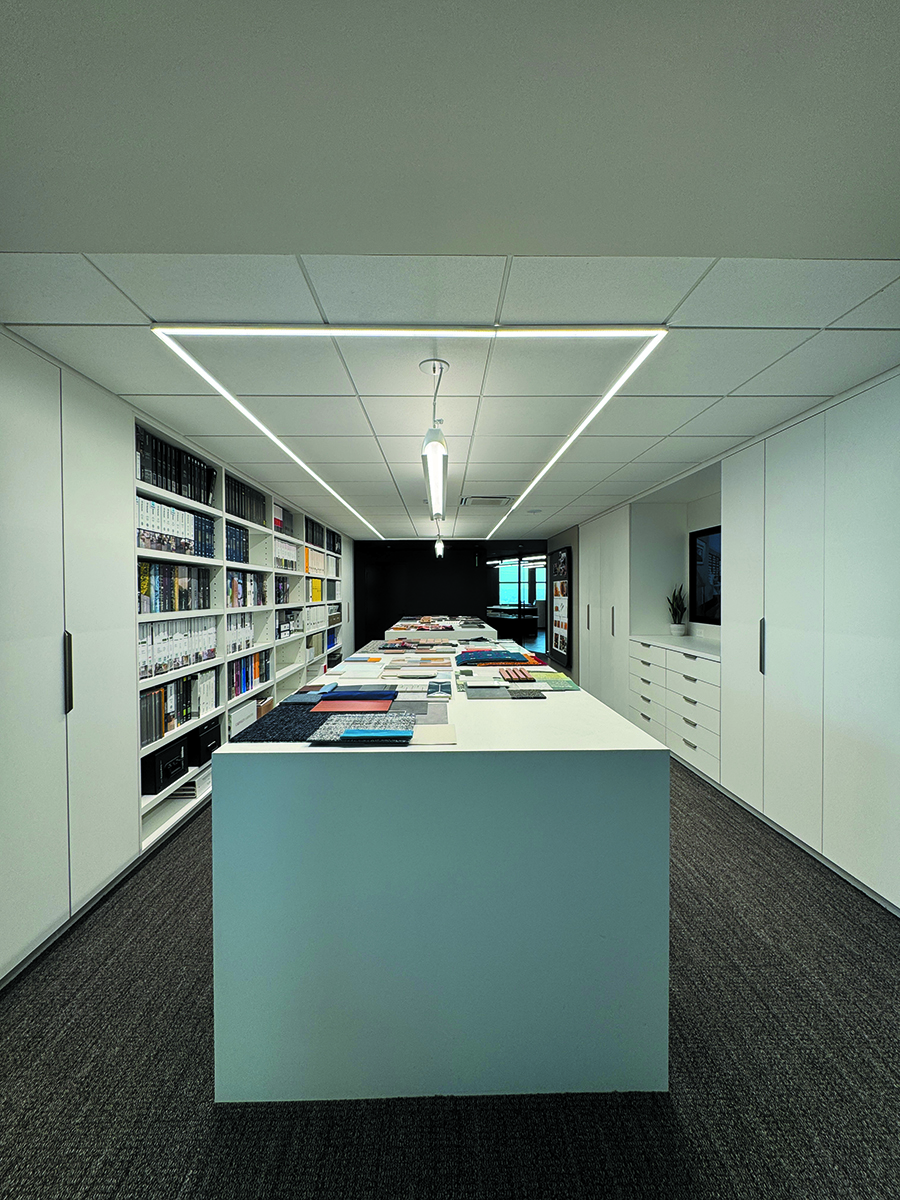 Adopting new technology early gave Geauga an advantage when DLR Group, a prominent engineering and architectural firm, decided to take over and update an entire 17,000-square-foot floor of the historic 16-floor, 272,000-square-foot Hanna Building in Cleveland, Ohio. Completed in 1922, the Hanna Building presented formidable design challenges. “Since it was an old building, floors weren’t level, walls weren’t exactly where they were supposed to be, and there were existing pipes, conduits, etc. that were to remain in place,” Berman says. “Anytime you work in a building that’s 100 years old, there’s always unforeseen issues.”
Besides the challenges of updating a historic building, DLR Group wanted their new offices to showcase their premier engineering and architectural work. “They do high-end projects, like museums, performing arts centers and large government buildings all over the globe, so they didn’t want a standard system,” Berman says. “They wanted to do something creative and new. They needed somebody who had experience in historic renovations and in design-assist projects.”
 Geauga started by collecting the best possible data. “We used a Trimble X9 3D scanner to get a full 3D model of the space, which allowed us to design around existing conditions.” The scanner sits on a tripod and self-levels, and the team controls the scanner with a tablet. Each scan takes 5 to 8 minutes, then the user carries it to the next location and repeats the process until the point cloud of the entire space is populated. Once the scans are complete, colorized and stitched together into a single model by Trimble software, the model is ready for export. “We use Autodesk ReCap to analyze, mesh, categorize and publish our point cloud to our cloud-based document management platform, Autodesk Construction Cloud. We then link the point cloud into other software we use to design our systems: Autodesk Revit and Autodesk Navisworks. We find great value in sharing our data with other trade partners involved in the project so that we all are given the best chance to translate a clash-free, optimized model into the field.”
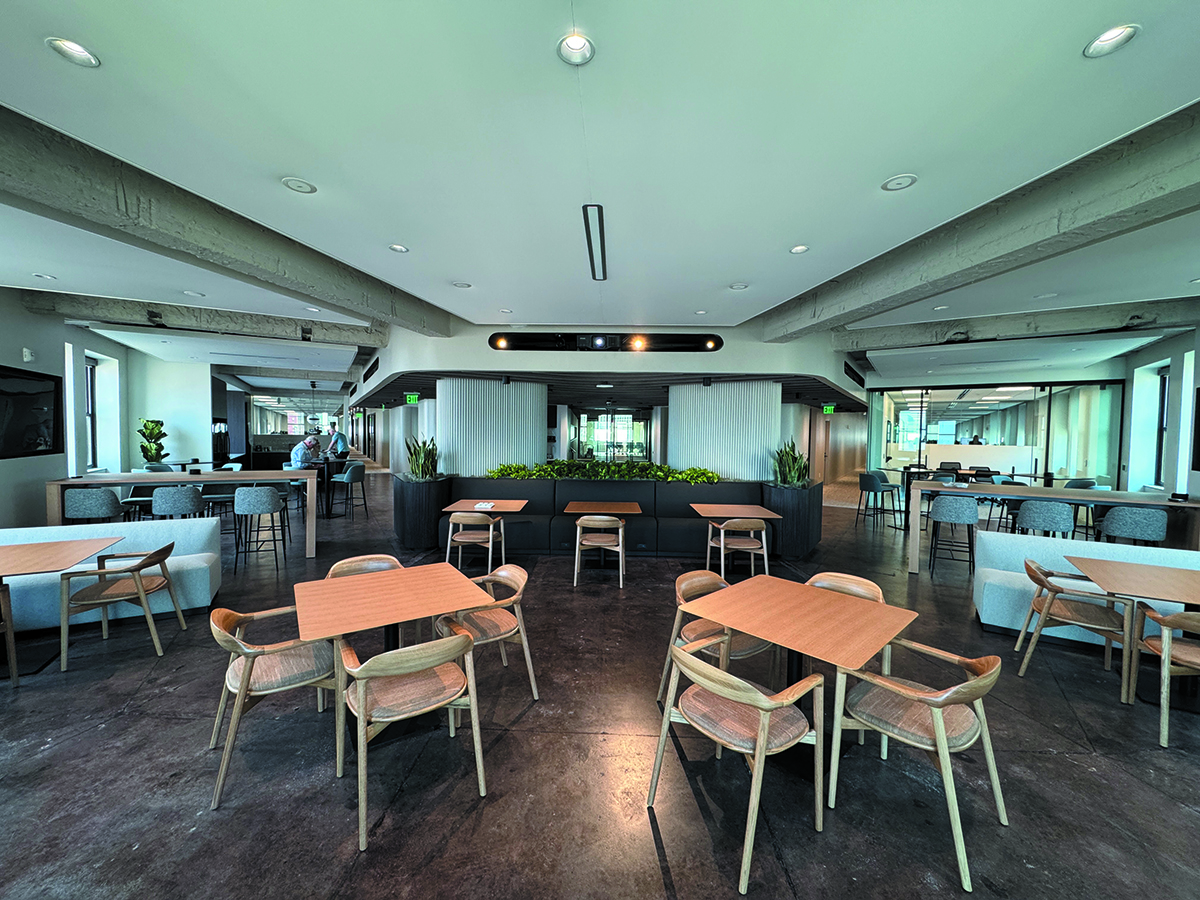 DLR Group kept the Hanna Building’s historic ceilings, which means that some mechanical features are exposed to view. “They did unique things to show off their design shops, so we spent time thinking through how ductwork was going to look, as opposed to how it was going to function,” Berman says.
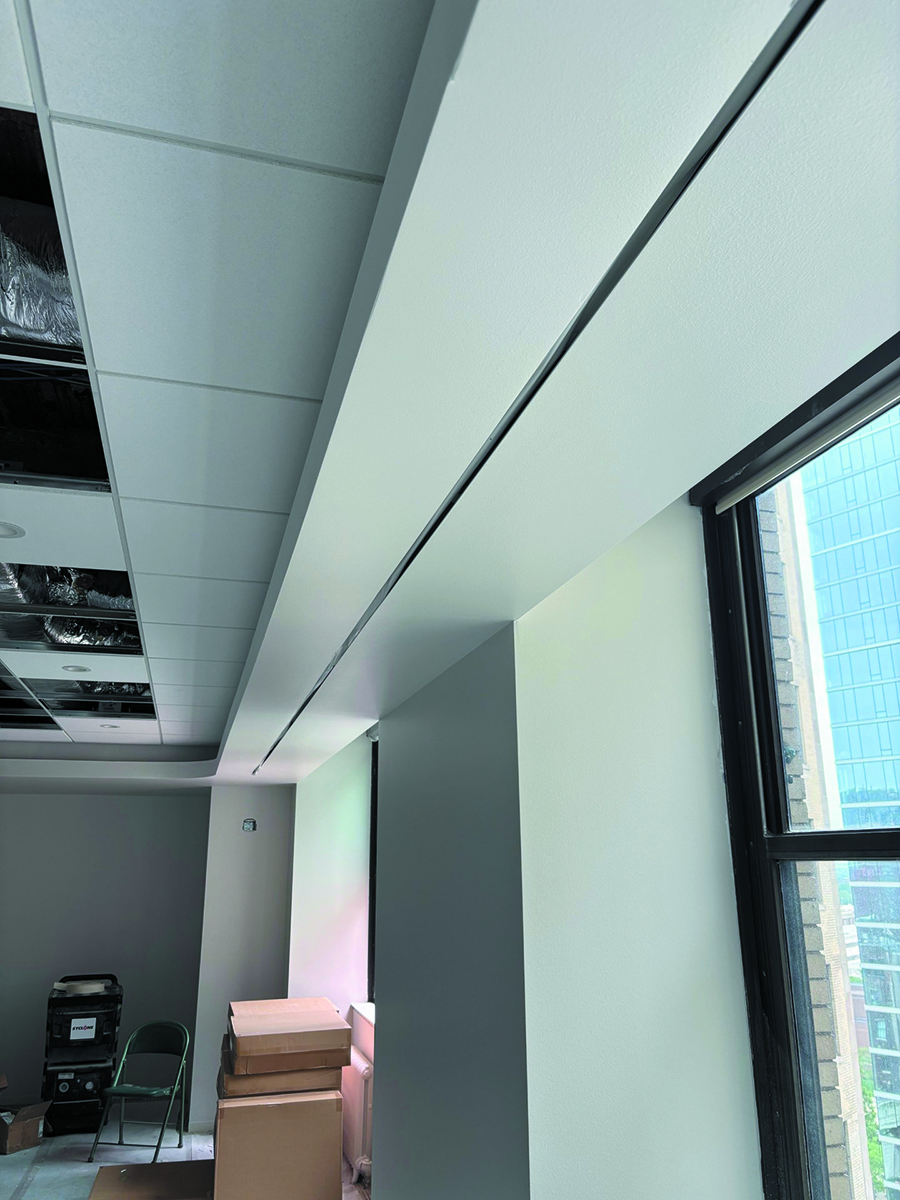
One of Berman’s favorite tricks was hiding ductwork in plain sight. “Ductwork had to cross an open corridor to another area, and they didn’t want to see any duct seams.” Geauga fabricated the solution in-house. “The corridor was wider than a normal joint of ductwork, so we made very long pieces of ductwork.” The seams are hidden on top of the duct. “When it was done and painted, everybody thought it was a beam, because it looked like the beams that were crossing the space. We’ve done walkthroughs with people, and they ask how we get the air to the other side because the duct blends in with the building.”
 Even the mechanical room is a showcase. “They want to show customers this mechanical room and the unique system they came up with,” Berman says. “Finding ways to make everything function but also look good in a tight mechanical space was a fun challenge. Everything had to look very clean. We laid it out in such a way that they could bring somebody in and show them around.”
Construction started in early 2025 and finished in July 2025. A team of three craftspersons fabricated 2,000 feet of galvanized steel weighing 12,000 pounds, which brought about 400 shop hours. The four-person onsite crew earned 1,200 more work-hours.
“We’ve worked with DLR Group on a lot of jobs,” Berman says. “They had confidence in Geauga Mechanical to put this together.”
Top photo: Geauga Mechanical had a team of three fabricate 2,000 feet of galvanized steel, which added up to about 400 shop hours. Then, a four-person onsite crew spent 1,200 more work-hours on installation.
Published: May 18, 2026
IN THIS ISSUE
AI Is Your New Apprentice: Why Contractors Need Training, Guardrails and an AI Game Plan in 2026
Unlike some technologies, AI is not just something firms adopt; it has a strong individual-level adoption, which presents a problem familiar to leaders who dealt with the introduction of smartphones 15 years ago.
ARCHITECTURAL: Where Metal Meets the Landscape
California Sheet Metal’s award-winning work at Bioterra proves that architectural precision and environmental harmony are not mutually exclusive.
Chapter Spotlight: SMACNA Detroit - America’s Comeback City
The Motor City’s SMACNA chapter works to capture new opportunities in this resurgent community.
Clean Air, Efficient Buildings: SMACNA Pushes Three Bills That Could Transform the Industry
The construction slowdown that began in early 2025 only worsened in 2026 due to increased metal and equipment tariffs,spiking energy costs and stubborn interest rates.
How a Father’s Advice Built a Career
SMACNA's President discusses his story of how he entered the trades and provides advice for those looking to join our industry.
HVAC: 75 Years and Still Ahead of the Curve
Geauga Mechanical’s three-generation bet on innovation pays off in an historic Cleveland renovation.
INDUSTRIAL: Metal and Microclimates
How HVAC is powering America’s next industrial boom.
Powering the Trades
Learn more about the enormous potential of a career in the trades and why it is important for SMACNA to do its part to build a sustainable and dynamic workforce.
RESIDENTIAL: Breathing Life Into Burnaby’s New Skyline
At Gilmore Place, Evergreen Sheet Metal navigated one of the most complex HVAC installations in British Columbia’s history.
TESTING, ADJUSTING AND BALANCING: Tuning the Invisible TAB Orchestra
HVAC systems hum silently when balanced right, delivering comfort, safety and efficiency. But when done wrong, the noise of wasted energy and failed inspections can drown out everything.
Welcome New SMACNA Members
What Contractors Should Know About “No Tax on Overtime”
To keep projects moving and crews in the field, overtime has long been a reality in the construction industry.
Workforce Strategies: A Trade Without Walls
How three professionals from academia, marketing and tech left their careers behind and found their futures in sheet metal and HVAC.
Workforce Strategies: Building the Workforce of the Future
National Careers in Trades Week returns with new partners, new research and a new generation ready to work.
Workforce Strategies: Finding and Retaining Talent in a Shifting Workforce
How to recruit with authenticity, retain through empathy and develop through opportunity.
Workforce Strategies: How to Build an Internship Program That Works
Sheet metal and HVAC leaders reveal proven strategies that turn college talent into industry lifelines, even for small firms.
Privacy Policy |
Terms of Use | Contact Us
Phone: 703.803.2980 | Email:
info@smacna.org
© 1998-2026 SMACNA. All rights reserved.
Web Design & Development by Matrix Group
International, Inc.
